Annadanam Catering in Bangalore: Temple and Community Meal Planning
AI Overview
Annadanam catering in Bangalore typically needs a planning budget of ₹70–₹220 per person in 2026 for simple vegetarian community meals, depending on menu, attendance and service arrangements. Confirm the temple’s ingredient rules, kitchen permissions and distribution window before booking. For open attendance, agree on a funded meal count, a modest food buffer and an authorised refill decision-maker. Batch delivery, adequate serving teams, drinking water and safe holding temperatures matter more than a long menu.
Key takeaways
- For 300 or more meals, use ₹70–₹220 per person as an indicative 2026 planning range, not a fixed quotation.
- Get the temple’s ingredient, kitchen and distribution permissions before finalising the menu.
- Separate expected attendance, sponsored meal count and extra-meal authorisation; they are not the same number.
- Specify cooked serving weights and a controlled buffer rather than adding extra food to every vessel.
- Budget for drinking water, service staff, plates, cleaning and waste removal—not just cooking.
- Serve in manageable batches and provide a separate assisted-service arrangement for people who cannot stand in a queue.
Key takeaways
- For 300 or more meals, use ₹70–₹220 per person as an indicative 2026 planning range, not a fixed quotation.
- Get the temple’s ingredient, kitchen and distribution permissions before finalising the menu.
- Separate expected attendance, sponsored meal count and extra-meal authorisation; they are not the same number.
- Specify cooked serving weights and a controlled buffer rather than adding extra food to every vessel.
- Budget for drinking water, service staff, plates, cleaning and waste removal—not just cooking.
- Serve in manageable batches and provide a separate assisted-service arrangement for people who cannot stand in a queue.
1. Start with the temple’s rules and the sponsor’s commitment
At Upendar Caterers, our pure vegetarian catering business operating since 1995, I approach annadanam as a dependable meal service, not a reduced wedding buffet. The priority is that people receive a wholesome meal respectfully, within the promised time and without confusion about who is responsible.
Before I recommend dishes, I ask the organiser to confirm the temple’s rules directly. Pure vegetarian food does not automatically satisfy every temple’s requirements: onion, garlic, particular vegetables, outside cooking and the handling of food before an offering may each need approval.
Keep three numbers separate: expected attendance, the number of meals the sponsor will fund and the maximum additional meals someone can authorise. For open community distribution, appoint one organiser to make that last decision rather than allowing several volunteers to place conflicting requests.
- Obtain approval for the menu, cooking location, unloading access and serving area.
- Ask whether food must be offered before distribution and who will communicate the release-to-serve instruction.
- Confirm whether the temple supplies vessels, plates, water, washing space, tables or volunteers.
- Agree who manages queues, clears the eating area and removes wet waste.
- Keep announcements about meal availability accurate; a sponsored quantity should not be advertised as unlimited.
2. Annadanam catering prices in Bangalore for 2026
For an initial budget, I would use the following indicative bands for 300 or more meals delivered and served in one continuous window. These are planning estimates, not published fixed packages: the final quote depends on ingredients, volume, transport, venue facilities and the work included.
A smaller distribution may cost more per person because vehicle and staffing costs are spread across fewer meals. A large distribution does not automatically become cheaper if it needs several delivery trips, temporary washing facilities or service across multiple locations.
- Ask whether the price includes cooking, transport, serving staff, vessels and serving equipment.
- List plates or leaves, drinking water, cleaning, waste removal and applicable taxes separately wherever they are excluded.
- Confirm charges for an extended service window and the latest time for increasing the meal count.
| Meal format | Example pure vegetarian menu | Planning price per person |
|---|---|---|
| Simple two-item meal | Vegetable khara pongal and sambar | ₹70–₹95 |
| Compact rice meal | Lemon rice or puliyogare, curd rice and pickle | ₹85–₹120 |
| Rice meal with vegetable and sweet | Lemon rice, curd rice, seasonal palya and kesari | ₹110–₹155 |
| Full community lunch | Rice, sambar, rasam, palya, curd or buttermilk, pickle and one sweet | ₹150–₹220 |
3. Choose a menu that remains manageable through service
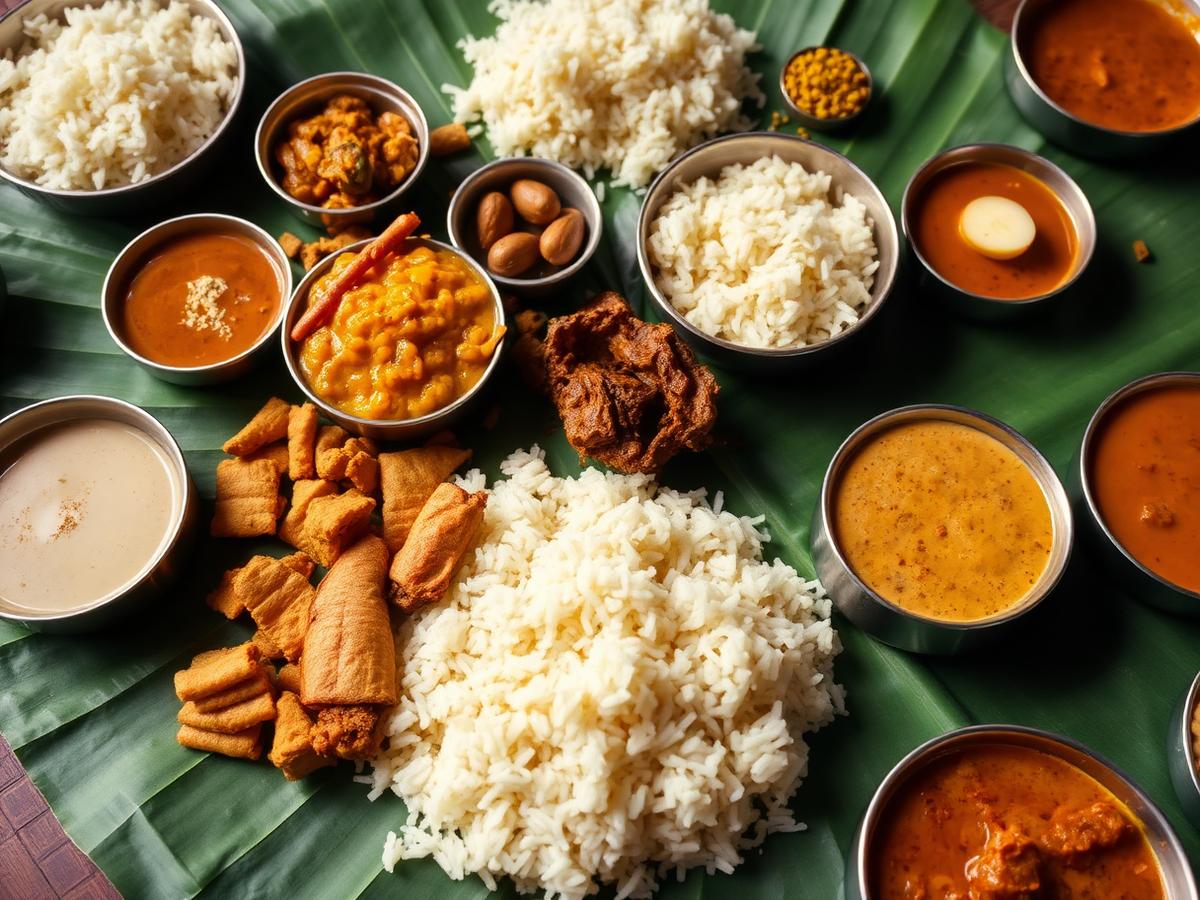
For a short distribution window, I favour a compact rice meal over several separately served courses. Lemon rice, curd rice, a seasonal vegetable and kesari provide variety without requiring every guest to stop at eight vessels. Use only ingredients approved by the temple.
For a seated lunch with washing facilities, rice, sambar, rasam and palya can work well. However, liquid dishes require careful carrying and more clearing support. Crisp accompaniments and multiple sweets add handling without necessarily making the meal more useful.
I would avoid live counters for this format. They introduce individual cooking time into a service whose main job is to feed everyone steadily. Keep any separate prasadam distribution coordinated with the meal team so that guests do not have to cross a moving queue.
- Choose one main rice preparation rather than offering several competing varieties.
- Keep chilli moderate and pickle optional; guests should be able to decline individual items.
- Confirm peanuts, sesame, milk and other relevant allergens, and brief servers accurately.
- Do not describe a meal as allergen-free unless ingredients and cross-contact controls genuinely support that claim.
- Offer assistance or a suitable texture adjustment where feasible, rather than assuming every guest can manage the same portion.
4. Set cooked quantities and a funded buffer
For the compact meal below, I would start with 560 g of cooked food per adult meal and adjust after discussing the guest mix and whether seconds are expected. These are finished serving weights, not raw rice purchase quantities. Children and lighter eaters may take less, while some guests will need a second helping.
For 1,000 expected meals, a 5% buffer means preparing 1,050 meal-equivalents. That is an example, not a universal rule: festival footfall or completely open attendance may require a larger funded reserve and staged replenishment. Keep the buffer in controlled holding rather than making every initial portion oversized.
- Use a standard serving ladle and weigh a trial plate before distribution begins.
- Review portions after the first 50–100 meals; check both guest requests and food left on plates.
- Track meals issued with a counter or tally, without creating an unnecessary registration barrier.
- If attendance exceeds the agreed reserve, contact the authorised organiser early; fresh cooking cannot be promised instantly.
| Item | Cooked quantity per meal | Quantity for 1,050 meals |
|---|---|---|
| Lemon rice or puliyogare | 250 g | 262.5 kg |
| Curd rice | 180 g | 189 kg |
| Seasonal vegetable palya | 70 g | 73.5 kg |
| Kesari | 60 g | 63 kg |
| Optional buttermilk, priced separately | 150 ml | 157.5 litres |
5. Design dignified queues and a realistic serving team
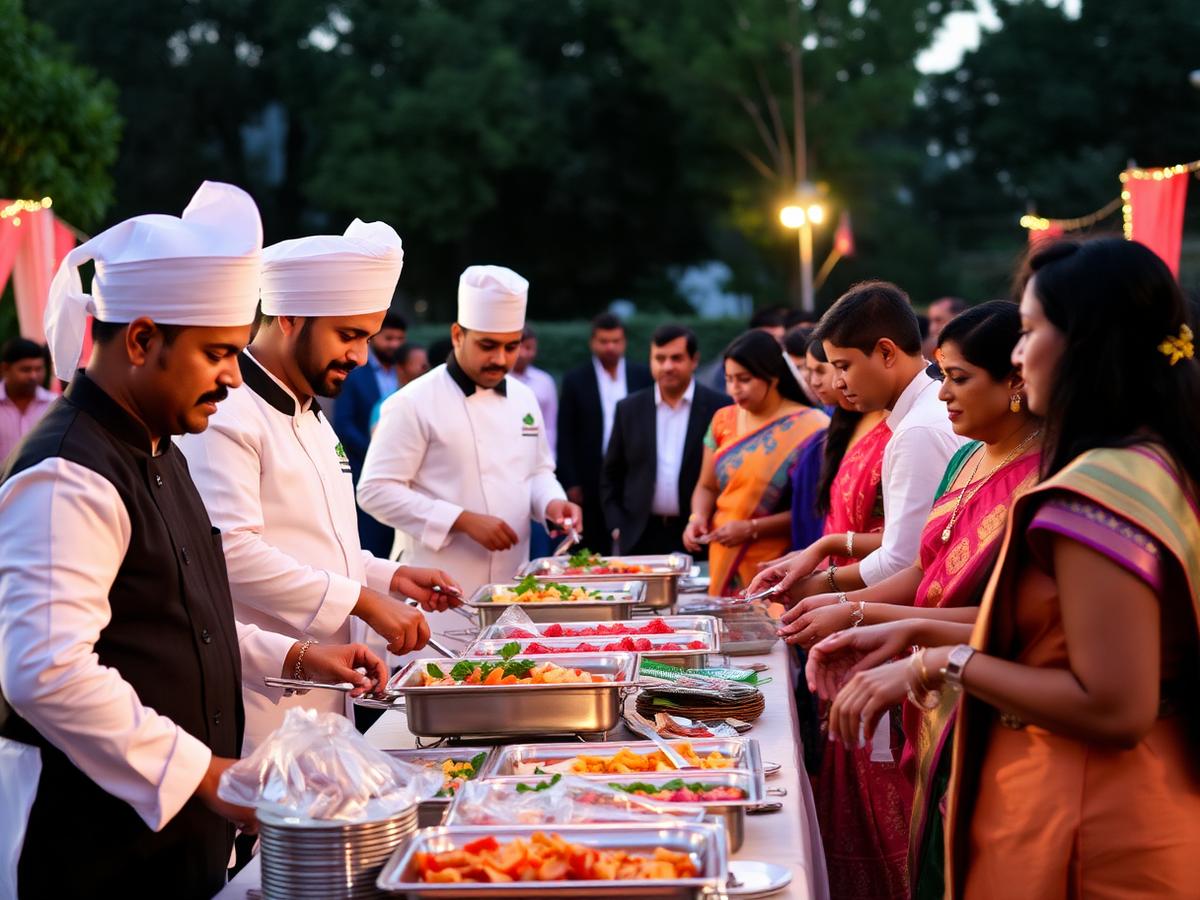
For 1,000 meals over two hours, I would assess three identical serving lines rather than one long counter. Allowing 20 minutes for interruptions leaves 100 active minutes, so each line must serve roughly three to four people a minute. Test that pace with the actual menu, plates and space before relying on it.
For this compact format, start with one counter server per roughly 65–85 expected meals across the two-hour window, then round up to staff every station. That ratio covers servers only—not cooks, replenishment, cleaning or water support. A seated full meal needs a different deployment.
Provide a clear assisted-service point for older people, people with disabilities and anyone unable to queue safely. Keep drinking water away from the food pickup bottleneck, and make sure the route does not obstruct temple access or emergency exits.
- Counter service: 4–5 people per line, or 12–15 across three lines.
- Replenishment: 3 runners so servers do not leave their stations to fetch food.
- Clearing and waste segregation: start with 4 staff; add a separate washing team if reusable plates are used.
- Drinking water: 2 attendants, with additional support if water is served at seats.
- Supervision and queue coordination: 2 designated leads; cooking and loading teams are additional.
- Volunteer briefing: allow 20–30 minutes to explain portions, hygiene, assistance and extra-meal authorisation.
6. Plan delivery, temperature control and the end of service
Build the cooking schedule backwards from the approved distribution time, including Bengaluru traffic, unloading and any offering. For a noon start, aim to have tables, water and waste stations ready by 11 am, brief the service team around 11:15 am and complete food acceptance checks before opening. Food arrival itself must follow the holding plan—not simply be as early as possible.
My service plan would keep hot food at 65°C or above and chilled food at 5°C or below, with clean probe checks on dispatch, arrival and during holding. Curd rice needs particular care: do not leave the entire quantity at ambient temperature for a long queue. Use controlled chilled storage and replenish small service batches.
At closing, separate untouched, safely held food from anything exposed on counters or returned from plates. Agree in advance whether safe surplus can be transferred immediately to an approved recipient. Do not promise that all leftovers can be redistributed regardless of their handling history.
- Use food-grade covered transport vessels and protected serving utensils.
- Keep a simple batch record showing dispatch time, receipt time and temperature checks.
- Provide soap, safe handwashing water and a hygienic drying method for handlers.
- Use safe potable water for cooking, drinking and utensil cleaning.
- Follow the applicable food-safety requirements; if temperature control fails, isolate the affected batch and assess it before service.
- Schedule clearing throughout the meal, not only after the last guest leaves.
7. Put the sponsor budget and booking scope in writing
As a worked example, 1,000 funded meals at an agreed ₹120 per meal come to ₹1,20,000. If a 5% reserve is also chargeable at that rate, the food-and-service line becomes ₹1,26,000 before any excluded items or applicable taxes. Confirm whether reserve meals are billed as committed production or only under another written arrangement; do not assume unused food is unchargeable.
For recurring annadanam, approve the menu, attendance review and donation budget for each service cycle. A predictable, manageable meal is better than a generous first day followed by an unfunded commitment.
To discuss an annadanam with Upendar Caterers, call 9661650666 with the date, temple or community venue, funded count and service window. Our official office and kitchen address is Coffee Board Layout, Nagavara, Bengaluru, Karnataka 560024.
- Written menu with temple-approved ingredients and any substitutions requiring permission.
- Guaranteed count, buffer quantity, final-count deadline and additional-meal rate.
- Exact scope for transport, serving, water, plates, washing, clearing and waste removal.
- Delivery window, distribution start, closing time and overtime terms.
- One named contact each for the sponsor, temple or venue, and catering team.
- Payment schedule, cancellation terms and applicable tax treatment.
Areas we serve in Bengaluru
We cook on site across Bengaluru. Pick your neighbourhood for local menus, pricing and venue notes:
- Yelahanka catering
- RT Nagar catering
- Kalyan Nagar catering
- Nagavara catering
- Hebbal & Kempapura catering
- Sahakarnagar catering
- Thanisandra catering
- Manyata Tech Park catering
Get a menu and quote for your date
Share your date, guest count and location — we will send a tailored pure-veg menu and per-plate quote the same day.
Frequently asked questions
- How much does annadanam catering cost in Bangalore in 2026?
- For 300 or more meals, use approximately ₹70–₹220 per person as an initial planning range. A simple pongal-and-sambar meal sits towards the lower end, while a full lunch with vegetable, curd and sweet costs more. Ask for a written quote showing transport, staff, plates, water, cleaning and applicable taxes.
- Can annadanam food be cooked outside the temple?
- That depends on the temple’s own rules, so get approval before paying a catering advance. Some venues may accept externally prepared food, while others require cooking on site or specific handling before an offering. The catering plan must follow the permission actually given, not assumptions based on another temple.
- Does all annadanam have to be without onion and garlic?
- No single ingredient rule applies to every temple or community meal. Confirm onion, garlic, vegetables, spice mixes and other restrictions with the responsible temple representative. Once approved, put the recipe restrictions in writing so purchasing and cooking teams follow the same instructions.
- How do we plan food when anyone can walk in?
- Set a funded meal count using the organiser’s attendance expectations and any reliable records from previous distributions. Add an agreed reserve, count meals as they are issued and nominate one person to authorise replenishment. For highly uncertain turnout, discuss staged cooking or delivery, including how long another batch would actually take.
- Can temple volunteers serve while the caterer only supplies food?
- Yes, if the venue permits it and the responsibilities are clear. Volunteers need a briefing on portion sizes, hand hygiene, utensils, queue assistance and when to request fresh vessels. Keep a designated service lead and clarify who provides temperature control, replenishment, water and final cleaning.
- Can unused annadanam food be donated elsewhere after service?
- Only food with a safe, known handling history should be considered for onward distribution. Arrange the recipient, suitable containers and prompt transport before service, and keep untouched food separate from counter-exposed food and plate returns. If safe holding or timing cannot be established, do not redistribute it simply to avoid waste.
About the author
Nandu Yadav
Chief Consultant & Owner, Upendar Caterers · 20 years in catering
Nandu Yadav is a veteran of the Bangalore catering industry with over 20 years of experience. He specializes in large-scale pure vegetarian event planning, traditional South Indian menu design, and per-plate costing for weddings and corporate events. Having managed over 5,000 successful functions across North Bangalore (Sanjaynagar, Sahakarnagar, Hebbal) and major tech parks, Nandu provides authoritative insights based on real-world logistical expertise.
- Pure Vegetarian Wedding Catering
- Per-plate Costing & Quantity Planning
- Traditional Brahmin & South Indian Menus
- Corporate Lunch Operations in Tech Parks
- On-site Kitchen Setup & Food Safety (FSSAI)
- Logistics for Large Events (5000+ guests)