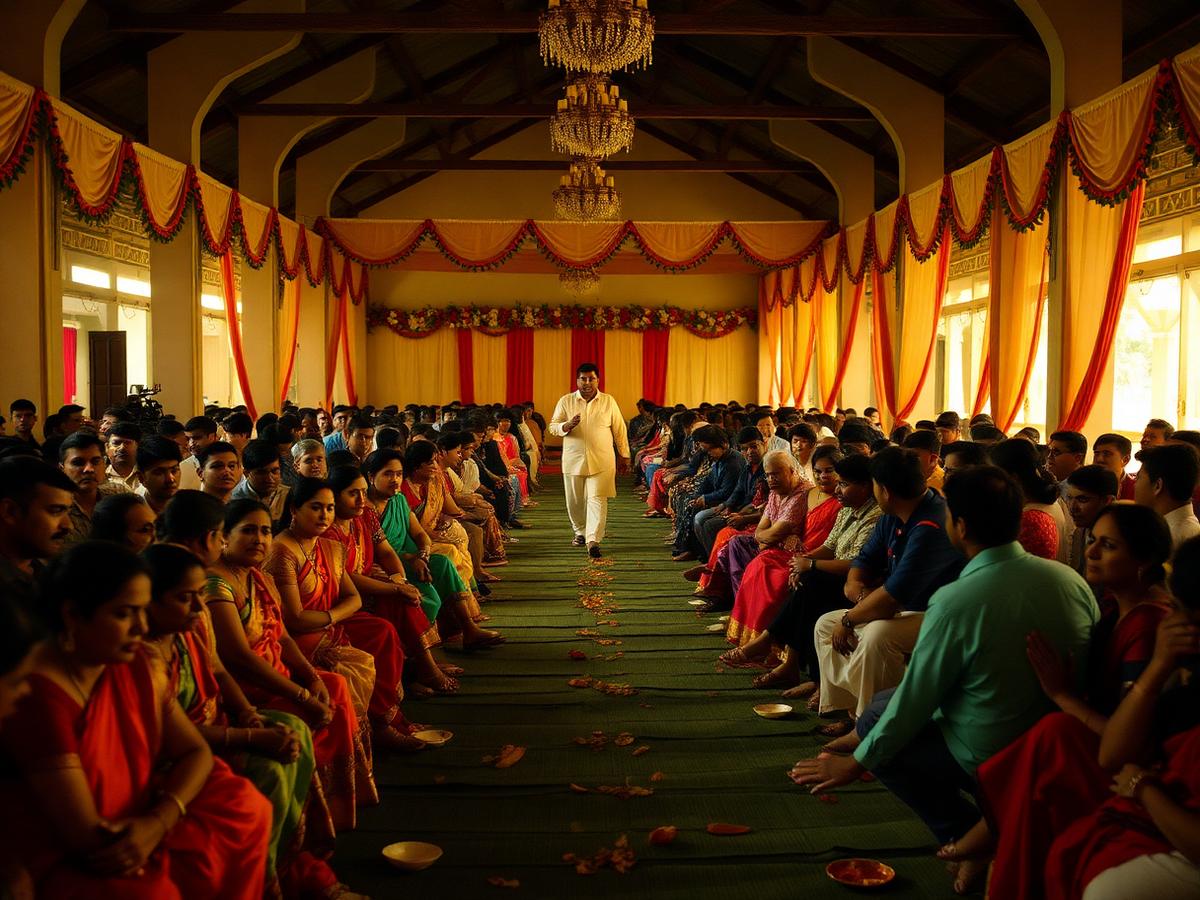
Satyanarayana Pooja Catering in Bangalore: Prasadam and Satvik Lunch at Home
AI Overview
Satyanarayana pooja catering in Bangalore should cover priest-approved prasadam, a no onion–no garlic vegetarian lunch and service timed after the offering and aarti. For 2026 planning, allow ₹250–₹340 per guest for a simple lunch or ₹350–₹460 for an expanded menu, before separately quoted staffing, transport, equipment and applicable taxes. Confirm the prasadam recipe with your priest, count everyone receiving it and keep the offering separate from lunch service. At home, a short menu and staggered seating usually work best.
Key takeaways
- Confirm the prasadam ingredients and offering procedure with your priest before approving the catering menu.
- No onion–no garlic is a starting point; restrictions on vegetables, spices and packaged ingredients vary by household.
- Budget ₹250–₹340 per guest for a simple lunch or ₹350–₹460 for an expanded lunch as indicative 2026 food-only planning bands.
- Plan approximately 50–70 g of prepared prasadam per recipient, including people who will not stay for lunch.
- Keep the offering untouched and separately covered until the family authorises distribution.
- Allow a 30–45-minute ritual buffer and agree on staffing, seating batches and hot holding before the function.
Key takeaways
- Confirm the prasadam ingredients and offering procedure with your priest before approving the catering menu.
- No onion–no garlic is a starting point; restrictions on vegetables, spices and packaged ingredients vary by household.
- Budget ₹250–₹340 per guest for a simple lunch or ₹350–₹460 for an expanded lunch as indicative 2026 food-only planning bands.
- Plan approximately 50–70 g of prepared prasadam per recipient, including people who will not stay for lunch.
- Keep the offering untouched and separately covered until the family authorises distribution.
- Allow a 30–45-minute ritual buffer and agree on staffing, seating batches and hot holding before the function.
1. Plan the offering and lunch as two separate services
At Upendar Caterers, our pure vegetarian catering business operating in Bengaluru since 1995, I approach a home Satyanarayana pooja differently from a regular lunch booking. The first responsibility is to have the agreed offering ready without disturbing the pooja. Feeding guests comes next, once the family gives us the go-ahead.
Before discussing extra dishes, I ask who is conducting the pooja, which family tradition is being followed and whether prasadam must be prepared at home. A caterer can organise ingredients, cooking and service, but the priest and household should decide what is suitable for the ritual.
- Record three counts: people attending the pooja, people eating lunch and people receiving takeaway prasadam.
- Include priests, visiting relatives and helpers in the relevant count rather than assuming they are covered.
- Identify one family coordinator who can approve offering handover and release lunch service.
- Confirm whether ritual utensils, fruit, flowers and other pooja materials are supplied by the family; do not assume they are part of catering.
2. Confirm the prasadam recipe before calculating quantities
There is no single prasadam recipe that I would impose on every household. Some families request a rava-based preparation with ghee, sugar, milk and banana; others follow a different wheat-based recipe or specific proportions. Even when the ingredients sound familiar, substitutions should be approved by the priest rather than made in the kitchen.
For distribution planning, allow roughly 50–70 g of prepared prasadam per person unless your family expects a larger portion. For 40 recipients, that is 2–2.8 kg; with a modest 10% distribution buffer, prepare approximately 2.2–3.1 kg. This is a serving estimate, not a ritual recipe or a prescribed offering quantity.
Keep the portion intended for offering in a clean, covered vessel with a dedicated spoon. Staff should not taste that portion or begin distribution before authorisation. Milk-based preparations need controlled holding, and any banana should be added at the stage agreed for the recipe rather than left cut for hours.
- Confirm the grain, sweetener, ghee, milk, banana, nuts and any prescribed proportions.
- Ask whether the priest requires the entire batch to be offered or a separately designated portion.
- Check wheat, milk and nut allergies before deciding how prasadam will be distributed.
- Provide food-safe containers for takeaway prasadam and count these recipients separately.
- If the household requires home preparation, book ingredient preparation or lunch-only catering instead.
3. Choose a short satvik lunch that suits the household
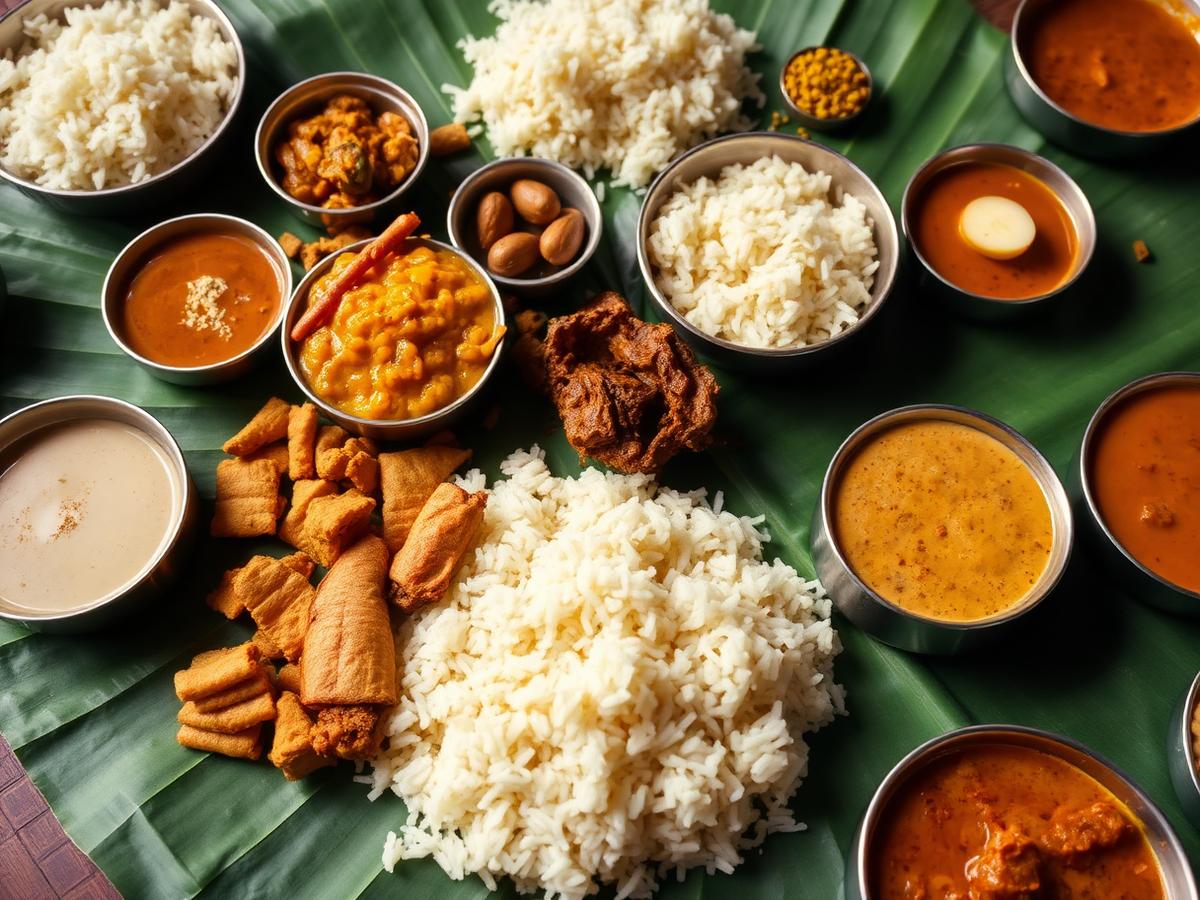
My preference for a home pooja is a rice-led meal that can be served promptly after aarti. A good starting menu is rice, bele tovve, one approved sambar or kootu, rasam, a vegetable palya, kosambari, curd, papad and payasam. Prasadam remains a separate part of the service, even if guests receive it immediately before lunch.
Do not stop the ingredient discussion at ‘no onion and no garlic’. Ask about brinjal, mushrooms, root vegetables, whole spices and ready-made masalas according to your household’s practice. Check compounded hing and other packaged ingredients where wheat avoidance or particular ingredient restrictions matter.
- Simple lunch: steamed rice, bele tovve, pumpkin sambar, rasam, beans palya, kosambari, curd, papad and one payasam.
- Expanded lunch: the simple menu with an approved flavoured rice, a second vegetable and one additional sweet.
- Use only priest- and family-approved vegetables and seasonings; the example menus are not universal ritual rules.
- Keep pickle and strongly spiced accompaniments optional rather than automatically adding them.
- Avoid a live counter for a compact home gathering unless there is a clear need and sufficient safe working space.
| Food | Planning quantity | Service note |
|---|---|---|
| Steamed rice | 250–300 g cooked, from roughly 85–100 g raw rice | Reduce plain rice if adding a flavoured rice; do not add a full second rice allowance. |
| Tovve, sambar and rasam | 250–300 g combined | Divide across the chosen dishes and serve initial portions lightly. |
| Palya and kosambari | 100–130 g combined | Keep kosambari chilled until close to service. |
| Curd | 60–80 g | Hold chilled and replenish in small batches. |
| Payasam | 80–100 g | Keep the serving modest when prasadam is also being distributed. |
4. Budget for the lunch and prasadam separately
For 2026 budgeting in Bengaluru, the bands below are useful starting points for a home gathering of roughly 30–80 lunch guests. They are indicative food-only estimates, not a confirmed Upendar Caterers quotation. The date, final recipe, guest count and service requirements must be checked before a price is committed.
A small booking can have a higher effective per-guest cost because transport, cooking labour and service setup do not reduce in direct proportion to attendance. Ask for the minimum billing amount and a written list of inclusions rather than comparing only the headline plate rate.
- Confirm whether banana leaves or plates, serving vessels, handwash arrangements and waste bags are included.
- Have serving staff, transport, equipment hire, takeaway containers and applicable taxes shown separately.
- State whether pooja fruit and other ritual ingredients are family-supplied.
- Agree on the charge for additional lunch guests and any service extension.
| Requirement | Budget band | Scope |
|---|---|---|
| Simple satvik lunch | ₹250–₹340 per guest | The simple rice-led menu above, with one payasam; prasadam excluded. |
| Expanded satvik lunch | ₹350–₹460 per guest | An additional rice, vegetable and sweet; prasadam excluded. |
| Prepared prasadam | ₹25–₹45 per recipient | Approximately 50–70 g; recipe, ghee and nut quantities affect the estimate. |
5. Work backwards from aarti, not from guest arrival
The lunch time should be provisional until the priest confirms the expected ritual sequence. For an anticipated 12 noon aarti and 12:30 pm lunch, I would arrange the food and service setup to be ready earlier, with a 30–45-minute buffer. Readiness does not mean laying out all the food at room temperature.
Use suitable insulated or heated equipment to hold hot food at 60°C or above, and keep chilled items at 5°C or below until service. If the pooja runs late, controlled holding matters more than repeatedly reheating food or leaving curd and kosambari on the table.
- Previous day: reconfirm the priest’s timing, prasadam recipe, lunch count and access instructions.
- 10:30–11:00 am: complete lunch-service setup for the example schedule, allowing extra time for apartment access.
- Before the offering: hand over the covered prasadam at the priest’s requested time; it may be needed well before aarti.
- After family approval: distribute prasadam and begin seating guests.
- 12:30–1:30 pm: run lunch in agreed batches, replenishing food in small quantities.
6. Match staff and seating to the available space
For seated banana-leaf service, plan roughly one server for every 20–25 guests seated at a time, plus one person managing food replenishment and clearing. For a compact buffet, one service attendant per 25–30 guests is a reasonable starting point, with additional help where older guests need plates brought to them.
A home with 20 comfortable dining places can serve 40 guests in two batches. Allow approximately 25–30 minutes per batch and 5–10 minutes to clear and reset. Keep the route between the food holding area and dining space away from the pooja area, children and guest footwear.
- For 40 guests eating in two seated batches, start with two servers and one replenishment/clearing helper; adjust for the layout.
- Provide chairs and table-height dining for guests who cannot comfortably sit on the floor.
- Confirm lift access, unloading arrangements and apartment association restrictions in advance.
- Agree on water, handwashing, electrical points and permission for any on-site heating equipment.
- Keep used leaves, leftovers and clean service vessels in separate areas.
7. Send a clear pooja catering brief before booking
The most useful enquiry includes the ritual requirements, not just ‘satvik food for 40 people’. Send the date, expected offering and lunch times, separate prasadam and meal counts, approved recipe, ingredient restrictions and available dining space. Also say whether you need delivery only, staffed service or permitted on-site preparation.
To discuss Satyanarayana pooja catering with Upendar Caterers, call 9661650666. Our official office and kitchen address is Coffee Board Layout, Nagavara, Bengaluru, Karnataka 560024. We can then work through the menu and service scope before confirming availability and a written quotation.
- Confirm the menu and exclusions in writing.
- Agree on a final headcount deadline, preferably 24–48 hours before service where feasible.
- Record the offering handover time separately from lunch time.
- Name the family member authorised to approve service and additional portions.
- Document payment terms, cancellation terms and responsibility for leftovers and cleanup.
Areas we serve in Bengaluru
We cook on site across Bengaluru. Pick your neighbourhood for local menus, pricing and venue notes:
- Yelahanka catering
- RT Nagar catering
- Kalyan Nagar catering
- Nagavara catering
- Hebbal & Kempapura catering
- Sahakarnagar catering
- Thanisandra catering
- Manyata Tech Park catering
Get a menu and quote for your date
Share your date, guest count and location — we will send a tailored pure-veg menu and per-plate quote the same day.
Frequently asked questions
- Can a caterer prepare Satyanarayana pooja prasadam, or must it be made at home?
- This depends on your family’s practice and the priest’s instructions. Confirm whether outside preparation is acceptable, which ingredients and proportions are required, and whether any part must be completed at home. If home preparation is required, catering can be limited to lunch or agreed ingredient preparation.
- What does Satyanarayana pooja catering cost in Bangalore in 2026?
- For planning, allow ₹250–₹340 per guest for a simple satvik lunch or ₹350–₹460 for an expanded lunch, with prasadam estimated separately at ₹25–₹45 per recipient. These are indicative food-only bands for roughly 30–80 lunch guests, not confirmed booking rates. Ask for staffing, transport, equipment, applicable taxes and any minimum billing to be stated in the quotation.
- How much prasadam should I order if some guests will not stay for lunch?
- Count every prasadam recipient, including those leaving after the pooja and any separately requested takeaway portions. A practical distribution allowance is 50–70 g per person, with around 10% extra if attendance is uncertain. Keep this calculation separate from the lunch headcount and confirm any ritual-specific quantity with your priest.
- Is no onion–no garlic food enough for a satvik pooja lunch?
- Not necessarily, because households differ on permitted vegetables, spices and packaged ingredients. Give the caterer a written restriction list approved by your family or priest rather than relying only on the word ‘satvik’. Mention allergies separately, since a ritual-compliant dish may still contain wheat, milk, nuts or other allergens.
- What happens if the pooja finishes later than expected?
- Agree on a 30–45-minute buffer and appropriate hot and chilled holding before the event. Lunch should begin only after the designated family coordinator approves it, rather than automatically at the quoted time. For a longer delay, the caterer must reassess safe holding and any additional staffing time instead of leaving food exposed.
- Can lunch be served in a small apartment without a buffet?
- Yes, seated service in two or more batches can work well when there is limited space. For example, 20 dining places can accommodate 40 guests in two batches, allowing roughly 25–30 minutes to eat and 5–10 minutes to reset each batch. Confirm a safe food holding area, a clear serving route and suitable seating for older guests before choosing the format.
About the author
Nandu Yadav
Chief Consultant & Owner, Upendar Caterers · 20 years in catering
Nandu Yadav is a veteran of the Bangalore catering industry with over 20 years of experience. He specializes in large-scale pure vegetarian event planning, traditional South Indian menu design, and per-plate costing for weddings and corporate events. Having managed over 5,000 successful functions across North Bangalore (Sanjaynagar, Sahakarnagar, Hebbal) and major tech parks, Nandu provides authoritative insights based on real-world logistical expertise.
- Pure Vegetarian Wedding Catering
- Per-plate Costing & Quantity Planning
- Traditional Brahmin & South Indian Menus
- Corporate Lunch Operations in Tech Parks
- On-site Kitchen Setup & Food Safety (FSSAI)
- Logistics for Large Events (5000+ guests)