
Bengali Veg Catering in Bangalore: Puja Menus & 2026 Costs
AI Overview
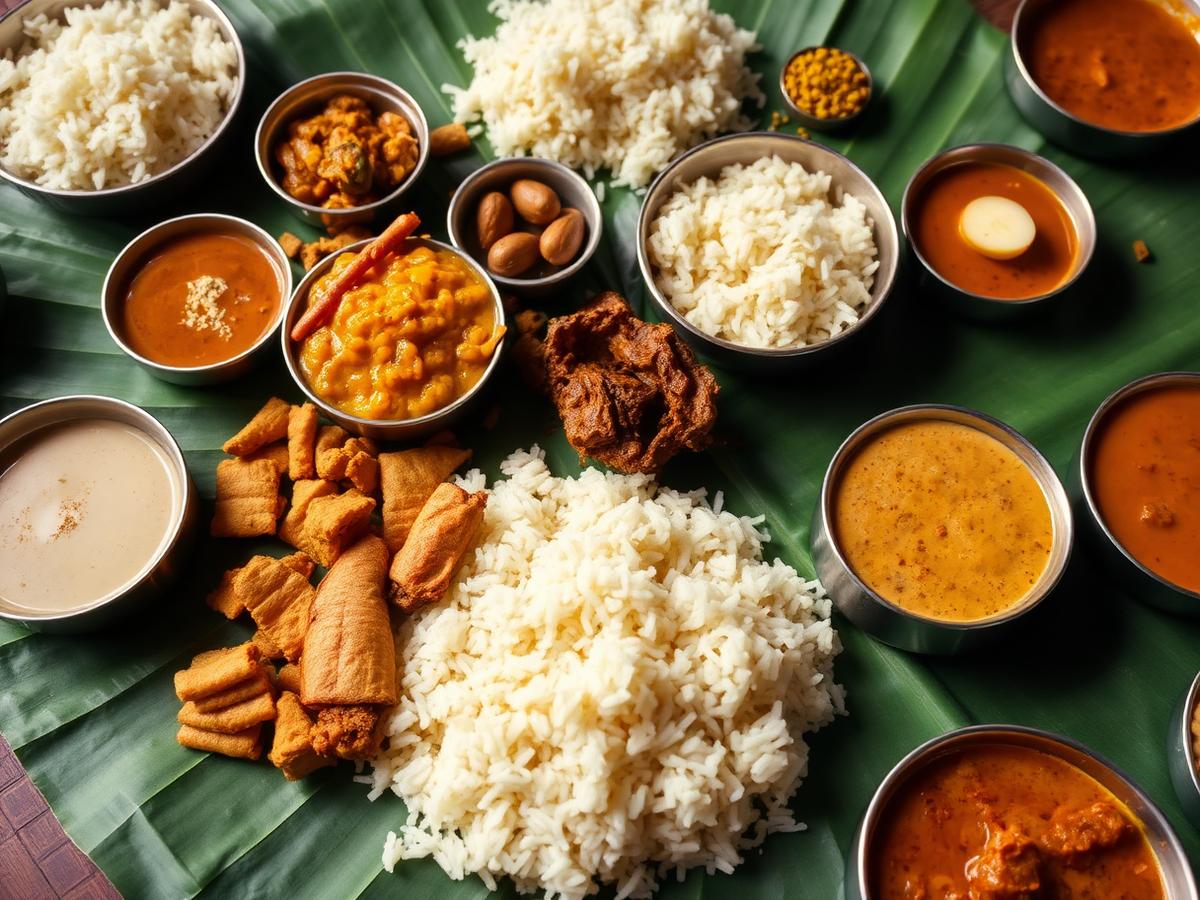
Bengali veg catering in Bangalore works best with a focused menu: bhoger khichuri, labra, a seasonal bhaja, tomato-khejur chutney and payesh for pujas; or luchi, cholar dal, rice, vegetable dishes and Bengali sweets for functions. For 2026 planning, allow approximately ₹320–₹450 per guest for a simple bhog-style meal and ₹480–₹900 for fuller menus, depending on service and selection. Confirm no-onion–no-garlic rules, offering arrangements, sweet sourcing and the post-puja serving time before booking.
Key takeaways
- Bengali vegetarian and puja-compliant niramish are not automatically the same: record the family's ingredient rules before finalising the menu.
- Build a puja meal around khichuri and labra rather than adding unrelated buffet dishes.
- Use ₹320–₹900 per guest as an indicative 2026 planning range, not a guaranteed quotation.
- Plan portions in cooked serving weights and fry luchi close to service.
- Keep the offering portion, guest meal and chilled sweets on clearly agreed handling schedules.
Key takeaways
- Bengali vegetarian and puja-compliant niramish are not automatically the same: record the family's ingredient rules before finalising the menu.
- Build a puja meal around khichuri and labra rather than adding unrelated buffet dishes.
- Use ₹320–₹900 per guest as an indicative 2026 planning range, not a guaranteed quotation.
- Plan portions in cooked serving weights and fry luchi close to service.
- Keep the offering portion, guest meal and chilled sweets on clearly agreed handling schedules.
1. Start with the puja rules, not the buffet list
At Upendar Caterers, the pure vegetarian business I run in Bengaluru, my first question for a Bengali puja meal is: what does your family permit in the bhog? A vegetarian function menu and a ritual offering can have different requirements. Onion and garlic may be acceptable at a family celebration but excluded from a niramish puja meal.
Since 1995, our work has centred on vegetarian catering. My approach to this menu is to record the family's preferences rather than assume that every Bengali household follows one recipe or offering practice. The host or priest should approve the bhog ingredients and who may prepare, handle and offer it.
- Confirm the occasion: Saraswati Puja, Durga Puja, Lakshmi Puja or a family function.
- Record onion and garlic restrictions, permitted dals, cooking fats and any packaged seasonings to avoid.
- Ask whether mustard oil, ginger, hing and particular vegetables are acceptable; do not treat them as universally permitted or prohibited.
- Clarify whether the caterer prepares the offering itself or only the meal served after a separately prepared bhog.
- Identify milk, wheat, mustard and nut allergies before approving recipes.
2. Three Bengali vegetarian menus that stay focused
For a puja, I would choose one substantial main, a vegetable accompaniment, a fried item, chutney and a sweet before adding anything else. Khichuri and labra give the meal its centre; several extra gravies usually add cost without making it feel more Bengali.
For a function without offering restrictions, a more elaborate menu can introduce luchi, cholar dal and a second sweet. Chhanar dalna is a chhena-based dish, so agree on the preparation rather than accepting a generic paneer curry under a Bengali name.
- Focused khichuri bhog: bhoger khichuri with roasted moong dal, labra, seasonal kumro bhaja or beguni, tomato-khejur chutney and payesh. All ingredients remain subject to ritual approval.
- Luchi-based puja meal: luchi, cholar dal, alur dom, a small portion of vegetable pulao, chutney and payesh. Keep the savoury dishes onion- and garlic-free where required.
- Bengali vegetarian function meal: luchi, cholar dal, basanti pulao, chhanar dalna, a seasonal vegetable dish, chutney, mishti doi and rosogolla.
- Optional substitutions: use shukto for a seated function if the family wants a bitter opening course, or replace one sweet with egg-free patishapta. These are substitutions, not compulsory additions.
3. Bengali veg catering prices in Bangalore for 2026
For initial budgeting, I would use the bands below for around 100 guests at one venue with a roughly 90-minute buffet service window. These are indicative 2026 planning estimates, not fixed Upendar Caterers packages or a citywide price survey.
The comparison assumes food, basic buffet vessels and service staff. Ask for transport, applicable taxes, crockery or disposables, venue charges and any on-site frying setup to be itemised separately. Smaller gatherings can have a higher per-person cost because staffing and transport do not reduce in proportion to guest count.
- A 100-guest bhog-style meal at ₹320–₹450 works out to ₹32,000–₹45,000 before separately quoted charges.
- Confirm whether sweets are made for the event or sourced, their serving weight and the number of pieces included.
- Specify the payable guaranteed headcount, any extra-plate rate and the deadline for changing numbers in writing.
| Meal format | Typical scope | Planning price per guest |
|---|---|---|
| Simple puja bhog-style meal | Khichuri, labra, one bhaja, chutney and payesh | ₹320–₹450 |
| Fuller puja or family lunch | Luchi, cholar dal, alur dom, one rice dish, chutney and one sweet | ₹480–₹650 |
| Elaborate Bengali vegetarian function | Luchi, dal, pulao, chhena dish, seasonal vegetable, chutney and two desserts | ₹700–₹900 |
4. Portion the khichuri meal without overloading it
The quantities below are cooked or ready-to-serve weights for one adult having a khichuri-led lunch, with no other main course. They are starting portions, not a promise that every guest will eat the same amount. Adjust for children, elderly guests, fasting guests and whether another meal is being served nearby.
For 100 confirmed adults, a reasonable starting production plan is 30 kg khichuri, 13 kg labra, 5 kg bhaja, 3 kg chutney and 10 kg payesh. A 5–10% reserve on the main and vegetable may suit a tightly confirmed gathering; an open community distribution needs an agreed attendance cap and additional batches instead.
- For a luchi-and-pulao menu, begin with three small luchis per adult, using approximately 60–75 g flour in total, alongside 120–150 g cooked pulao.
- Pair that combination with approximately 80–100 g cholar dal and 100–120 g alur dom or chhanar dalna per adult.
- Do not add these luchi-menu quantities to the full khichuri allocation; they describe a different meal.
| Dish | Cooked serving weight per guest | Planning note |
|---|---|---|
| Bhoger khichuri | 280–320 g | Keep a separately planned reserve for second helpings |
| Labra | 120–140 g | Serve recognisable vegetable pieces, not only gravy |
| Bhaja or beguni | 40–60 g | Usually one substantial piece or two smaller pieces |
| Tomato-khejur chutney | 25–35 g | A small finishing accompaniment |
| Payesh | 90–110 g | Increase only if it is the main attraction and there is no second sweet |
5. Set the cooking schedule around the offering
The crucial time is not simply when the puja begins; it is when the approved offering can be made and when guests may eat. I would confirm both times with one family coordinator and agree what happens if the ritual runs late. Do not leave the kitchen waiting for several relatives to give different instructions.
For a planned 12:30 pm lunch with an approximately noon offering, use the sequence below as a working plan. Where the family's practice requires an untasted offering portion, arrange that explicitly; use measured recipes and temperature checks rather than assuming the whole service batch can be handled without an agreed process.
- By 10:30 am: complete buffet setup, check potable water, handwashing access and the approved hot-holding or frying area.
- Around 11:15 am: begin the final khichuri cooking cycle, allowing for batch size and equipment.
- By 11:45 am: have the agreed offering portion ready in designated vessels and hand it to the authorised person.
- Around 12:10 pm: fry the first guest-service batch of luchi or bhaja, subject to confirmation that lunch is on schedule.
- At 12:30 pm: open guest service after the family's clearance, replenishing in smaller batches.
- During delays: keep hot food at 65°C or above and chilled dairy desserts at 5°C or below; do not leave mishti doi on an unrefrigerated display.
6. Protect the texture: frying, sweets and service staff
Luchi should not spend the whole journey compressed in a closed container. For the best result, confirm a venue-approved frying area and produce small batches close to service. Where frying is prohibited, I would favour a khichuri-led menu rather than promise the same result from long-held luchi.
For a 100-guest buffet, start with four service attendants, two replenishment or clearing helpers and one supervisor, excluding the cooking team. If luchi is fried on site, add a dedicated cook and assistant and check their equipment capacity. For seated service, plan roughly one server per 15–20 guests, plus runners.
For sweets, check the recipe and cold chain as carefully as the flavour. Mishti doi should stay refrigerated until service; agree on rosogolla size and count. If nolen-gur payesh is requested, confirm genuine ingredient availability before promising it, and label a substitute accurately.
- Place hot dishes in menu order, with chutney and sweets at the end to reduce backtracking.
- Keep a small assisted-service arrangement for elderly guests rather than making them wait at the frying station.
- Use egg-free desserts and check that any setting agents are vegetarian; disclose milk and other relevant allergens.
- Collect used plates away from the offering area and fresh-food replenishment route.
7. What to send us for a useful Bengali catering quote
A useful enquiry tells me the puja or function, guest count, venue facilities, ingredient restrictions and intended eating time. Share the family's preferred dish names and preparation style too: the sweetness of cholar dal, consistency of khichuri and vegetables in labra are worth agreeing before the event.
For a Bengali vegetarian catering enquiry, call Upendar Caterers on 9661650666. Our official office and kitchen address is Coffee Board Layout, Nagavara, Bengaluru, Karnataka 560024. We can discuss the menu and serving arrangement, with final pricing subject to the date, quantities and venue requirements.
- Send the event date, venue pin and confirmed adult and child counts.
- Separate the bhog requirement from the guest meal requirement.
- List prohibited ingredients and identify who gives final ritual approval.
- Confirm access time, water, power, ventilation and whether on-site frying is allowed.
- Request a written dish list, portions, sweet counts, staffing, service duration and all additional charges.
- For an important family function, request a tasting of the core dishes and confirm any tasting charge beforehand.
Areas we serve in Bengaluru
We cook on site across Bengaluru. Pick your neighbourhood for local menus, pricing and venue notes:
- Yelahanka catering
- RT Nagar catering
- Kalyan Nagar catering
- Nagavara catering
- Hebbal & Kempapura catering
- Sahakarnagar catering
- Thanisandra catering
- Manyata Tech Park catering
Get a menu and quote for your date
Share your date, guest count and location — we will send a tailored pure-veg menu and per-plate quote the same day.
Frequently asked questions
- Is Bengali vegetarian catering always without onion and garlic?
- No. A Bengali vegetarian celebration menu may include onion and garlic, while a puja-style niramish menu generally excludes them. Put the restrictions in writing and ask the family or priest to approve dals, seasonings and packaged ingredients as well.
- What is a suitable Bengali vegetarian menu for puja bhog?
- A focused starting menu is bhoger khichuri, labra, one seasonal bhaja, tomato-khejur chutney and payesh. The exact offering depends on the puja and household practice, so this is a planning suggestion rather than a universal ritual menu. Confirm whether the caterer may prepare the offering or should only provide the guest meal.
- How much does Bengali veg catering cost in Bangalore in 2026?
- For around 100 guests, budget approximately ₹320–₹450 per person for a simple bhog-style meal, ₹480–₹650 for a fuller lunch and ₹700–₹900 for an elaborate vegetarian function menu. These are indicative planning bands, not guaranteed rates. Ask whether transport, taxes, serving ware and an on-site frying setup are included in the final quotation.
- Can luchi be served fresh at a Bengaluru apartment clubhouse?
- Yes, if the association permits cooking or frying and provides a suitable ventilated area with the required utilities and fire-safety arrangements. Confirm these permissions before booking a luchi-led menu. If frying is not allowed, khichuri or pulao will usually travel and hold better than luchi made much earlier.
- Can Bengali sweets be included in a pure vegetarian menu?
- Traditional options such as rosogolla, sandesh, payesh and mishti doi can fit a pure vegetarian menu, but the actual recipe and supplier still need checking. Specify egg-free preparations and vegetarian setting agents if used. Confirm milk and nut allergens, portion sizes and refrigeration arrangements for dairy sweets.
- How do we plan catering when the puja finishing time is uncertain?
- Give the caterer an expected offering time, a likely delay window and one authorised family contact. Schedule final cooking and frying around that update, while holding prepared hot food at 65°C or above and chilled desserts at 5°C or below. Agree in advance whether a longer wait changes staffing charges or requires fresh replacement batches.
About the author
Nandu Yadav
Chief Consultant & Owner, Upendar Caterers · 20 years in catering
Nandu Yadav is a veteran of the Bangalore catering industry with over 20 years of experience. He specializes in large-scale pure vegetarian event planning, traditional South Indian menu design, and per-plate costing for weddings and corporate events. Having managed over 5,000 successful functions across North Bangalore (Sanjaynagar, Sahakarnagar, Hebbal) and major tech parks, Nandu provides authoritative insights based on real-world logistical expertise.
- Pure Vegetarian Wedding Catering
- Per-plate Costing & Quantity Planning
- Traditional Brahmin & South Indian Menus
- Corporate Lunch Operations in Tech Parks
- On-site Kitchen Setup & Food Safety (FSSAI)
- Logistics for Large Events (5000+ guests)