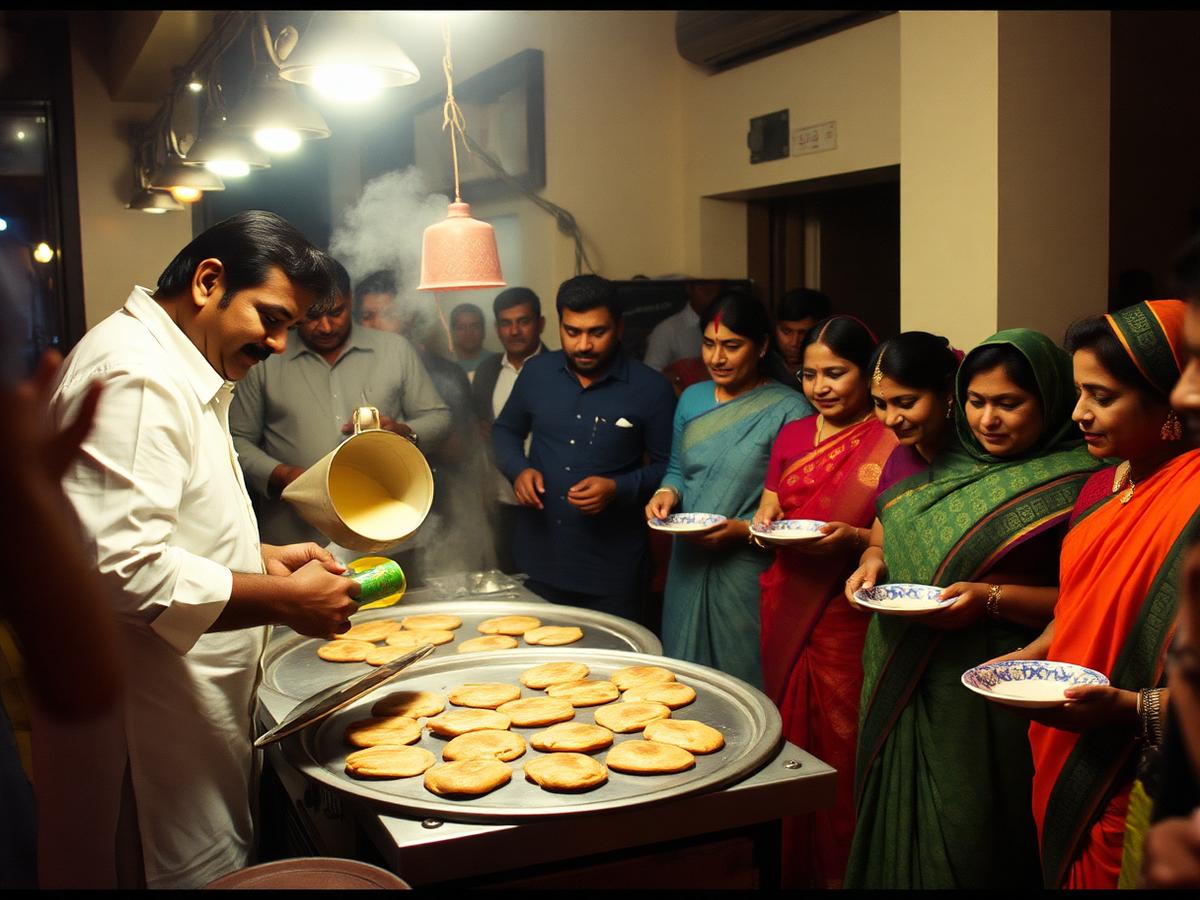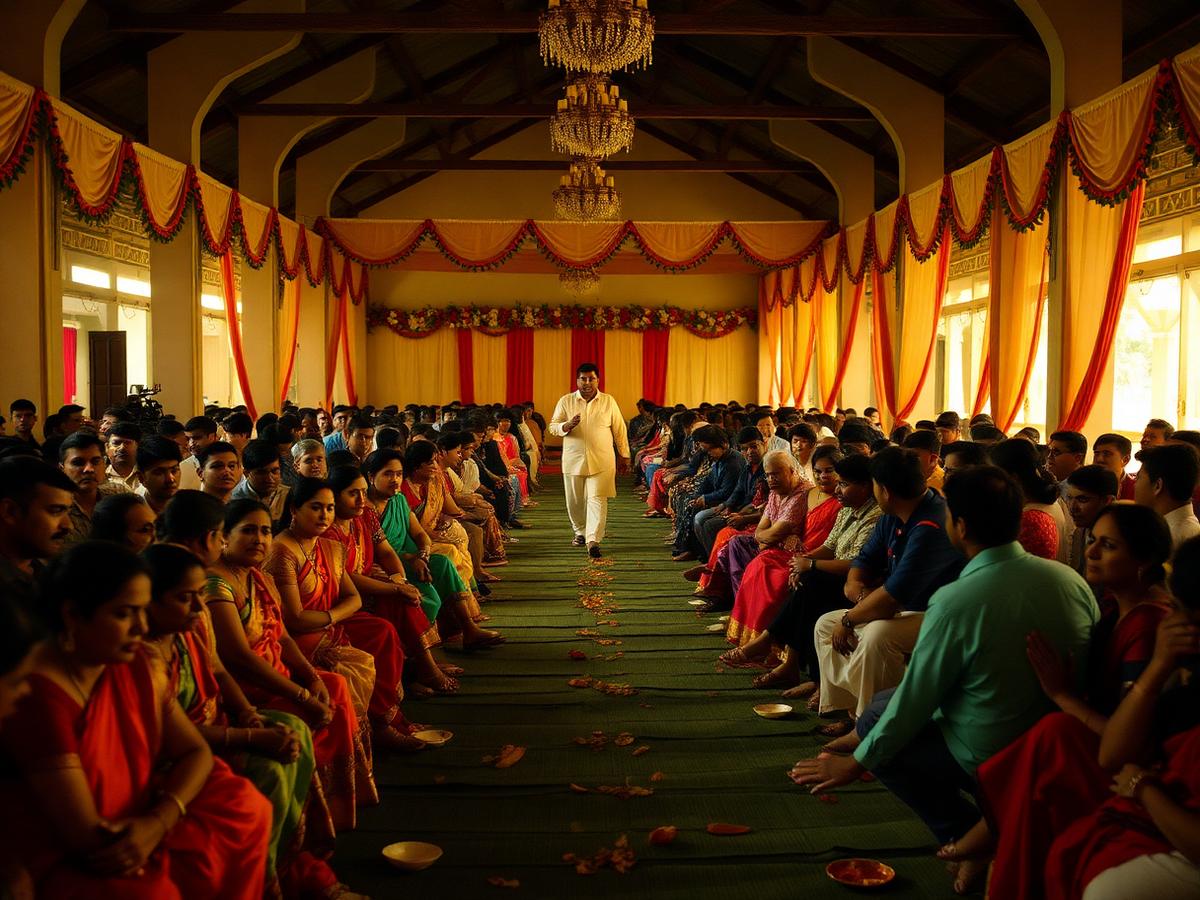
College Fest Catering in Bangalore: Counters, Costs and Crowd Planning
AI Overview
College fest catering in Bangalore works best with short, pure vegetarian menus, duplicate pickup counters and meal tokens tied to a realistic redemption count. For 2026 budgeting, allow approximately ₹95–₹135 per student for a snack-and-drink combo, ₹150–₹200 for a rice meal, or ₹190–₹260 for a two-counter meal. These are planning estimates, not fixed quotations. Size counters around the busiest break rather than total attendance, and confirm campus access, water, electricity, waste collection and responsibility for crowd control before booking.
Key takeaways
- Budget for meal redemptions, not simply the number of fest registrations.
- Duplicate popular meal counters before adding more menu choices.
- A planning rate of three completed handovers per minute per lane needs a timed rehearsal with the actual menu.
- Use separate arrangements for token checks, drinking water, performers and waste collection.
- Agree on the guaranteed quantity, extra-meal rate and who can authorise additional food in writing.
Key takeaways
- Budget for meal redemptions, not simply the number of fest registrations.
- Duplicate popular meal counters before adding more menu choices.
- A planning rate of three completed handovers per minute per lane needs a timed rehearsal with the actual menu.
- Use separate arrangements for token checks, drinking water, performers and waste collection.
- Agree on the guaranteed quantity, extra-meal rate and who can authorise additional food in writing.
1. Start with meal demand, not the college's total footfall
As chef and owner of Upendar Caterers, a pure vegetarian catering business operating since 1995, I start a college fest discussion with one question: how many people will want food in the same break? A fest with staggered entry needs a different plan from one where a performance releases the whole audience together.
Separate registered students, visiting participants, volunteers, faculty and performers. Then decide whether the college is buying a meal for each person, subsidising tokens or letting students pay at the stalls. Total registrations alone do not tell the kitchen how many meals to prepare.
- College-funded meal: agree on a guaranteed number of meals and use a single-use token or validated digital entitlement.
- Student-paid stalls: agree on prices, minimum sales commitment if any, vendor fees, payment collection and unsold-food responsibility.
- Hybrid arrangement: keep sponsored meal pickup separate from paid snacks so payment queries do not stop meal service.
- For a confirmed redemption count, discuss a 5–8% contingency with the caterer. Treat this as a planning allowance, not an attendance forecast.
- Hold volunteer and performer meals separately against an approved list rather than taking them from the student queue without recording them.
2. What college fest catering costs in Bangalore in 2026
The following are indicative 2026 budgeting bands for a campus service of roughly 300–1,000 confirmed portions, using a short menu and standard counters. They assume basic serving staff and standard food-service consumables; the final rate depends on the menu, service duration and site conditions.
GST as applicable, transport, campus vendor fees, furniture, weather cover, additional electrical work and extended service hours should be itemised separately. A student-paid stall also carries sales uncertainty, so its retail price cannot automatically be treated as a bulk catering rate.
| Format | Example entitlement | Budget per student | Operational fit |
|---|---|---|---|
| Snack-and-drink combo | Two idlis with sambar and chutney, plus a drink | ₹95–₹135 | A short break; not a full lunch replacement |
| Single-counter rice meal | Vegetable pulao, chana gravy and raita | ₹150–₹200 | Fast lunch pickup with minimal decisions |
| Two-counter meal | Rice meal plus one fixed snack | ₹190–₹260 | Students collect the snack at a separate station |
| Three-part fest meal | Rice meal, pav bhaji and one sweet | ₹270–₹360 | A longer meal window with controlled portions |
3. Choose food that travels well and portions that students understand
For the main student meal, I prefer one substantial base, one accompaniment and very few choices at pickup. Vegetable pulao with chana gravy is easier to move through a queue than individual custom orders. If you offer two rice options, display them before the queue divides.
The quantities below are starting portions for a mixed student crowd, not a guarantee of appetite. All weights are cooked, ready-to-serve amounts unless stated otherwise. If the rice meal is the only lunch, allow controlled seconds or increase its portion after discussing the student profile; do not quietly shrink portions to meet the budget.
| Item or combination | Quantity per redemption | Service note |
|---|---|---|
| Vegetable pulao meal | 250–280 g pulao + 100–120 g chana gravy + 60–80 g raita | Use separate portioning ladles; hold raita chilled |
| Pav bhaji as an additional substantial snack | Two pav totalling 60–70 g + 140–160 g bhaji | Finish pav in batches rather than customising each order |
| Idli snack combo | Two idlis totalling 100–120 g + 100–120 ml sambar + 20–25 g chutney | Keep chutney temperature-controlled and replenish in small batches |
| One sweet | 40–50 g | Pre-portion for quick handover |
| One beverage | 200 ml | Serve separately; drinking water remains available independently |
4. Calculate pickup lanes around the busiest 45 minutes
A counter is not necessarily a pickup lane: one long table with one server still has one bottleneck. For a short, pre-portioned menu, I would initially plan around three completed handovers per minute per lane, then test that rate with the actual plates, portions and token process. Made-to-order food needs its own slower capacity calculation.
For example, feeding 1,000 students in 45 minutes requires about 23 handovers per minute overall. Nine duplicate lanes at three handovers per minute provide a theoretical capacity of 1,215 meals in that window, leaving some headroom for replenishment and brief interruptions. This is a planning example, not a promised service speed.
- Use the formula: pickup lanes = peak meal redemptions ÷ service minutes ÷ tested handovers per minute; round up and add practical headroom.
- Validate meal entitlement before the serving point. Stamp, collect or digitally mark it once, with a fallback for network failure.
- Keep payment and UPI troubleshooting away from pickup lanes.
- Put identical menu boards at the queue entrance and above each lane.
- Place water and waste stations away from queue entrances, without obstructing accessible routes or emergency exits.
- Ask campus organisers to release groups in slots where possible; do not rely on food-service staff to manage crowd barriers.
5. Match the crew and campus setup to the counter plan
For a simple meal lane, a useful starting point is two service staff: one portions and one completes the handover. Add approximately one replenishment runner for every two lanes. Cooking, washing, clearing and water service need separate people; repeatedly borrowing servers for these jobs slows every queue.
For the nine-lane example, an initial catering roster could be 18 service staff, five runners, six kitchen and wash-up staff, four clearing staff, two water attendants and two supervisors: 37 people in total. The menu and on-site cooking requirements may change that number. College volunteers handling entitlement checks and authorised campus security are additional.
- Confirm vehicle entry, unloading point, gate passes and the carrying distance to the counters before finalising labour.
- Obtain written permission for LPG or electrical cooking equipment; confirm approved electrical loads, earthing and fire-safety arrangements with the campus.
- Provide potable water, a handwashing point with soap, drainage and a covered food-holding area.
- Use weather cover suitable for Bengaluru rain and wind, while keeping cooking areas ventilated.
- Allocate clean storage for serving ware and a separate route for dirty utensils and waste.
- Display ingredients of concern, including milk, wheat, nuts and soy where used. Pure vegetarian food is not automatically allergen-free.
6. Run service to a clock, with safe replenishment
For a 1 pm meal opening, I would target access and setup from 10 am, utilities and equipment checks by 11 am, a crew briefing at noon and readiness checks by 12.30 pm. Food arrival and final cooking should follow the holding capacity and travel plan; arriving early is not useful if cooked food sits without temperature control.
Keep hot-held food at 65°C or above and cold-held food at 5°C or below, with checks on receipt and during service. Bring smaller service batches forward from controlled holding, keep them covered and never mix a fresh batch into an old tray. Food with an uncertain time–temperature history should not be served.
- 48 hours before: freeze the guaranteed meal count, menu, service windows and authorised organiser contact.
- One day before: verify vehicle passes, utilities, counter positions and waste collection arrangements.
- 30 minutes before opening: test a complete token-to-handover cycle and check portioning tools.
- Every 10–15 minutes during the rush: review redemptions, queue length and remaining portions with the service lead.
- If the programme runs late: keep food under controlled holding and agree on a revised opening time rather than laying everything out.
- At closing: distinguish untouched, safely held reserve food from exposed counter food; do not promise that every leftover can be packed or donated.
7. Put tokens, extras and closing responsibilities in writing
The most useful college fest catering quotation describes what one meal entitlement includes. Does it cover one visit to each counter, unrestricted seconds or one complete tray? Agree on this before printing tokens, especially when students are paying for them.
For a campus catering discussion with Upendar Caterers, call 9661650666 with the date, campus, expected meal redemptions, busiest service window and available utilities. I would rather price a clear, workable counter plan than offer a low headline rate that leaves staffing and equipment unresolved.
- Record the guaranteed quantity, contingency quantity and whether billing follows the guarantee, actual redemptions or an agreed minimum-plus-extras model.
- Name one organiser who can approve additional meals, with a per-meal rate, availability limit and realistic preparation lead time.
- For paid stalls, specify settlement timing, campus commission if any, refunds and responsibility for payment failures.
- Confirm which party supplies counters, barriers, signage, bins, power connections and weather cover.
- State whether clearing means collecting service waste, cleaning the serving area or transporting waste off campus.
- Include cancellation terms, programme-delay charges and the agreed service closing time.
Areas we serve in Bengaluru
We cook on site across Bengaluru. Pick your neighbourhood for local menus, pricing and venue notes:
- Yelahanka catering
- RT Nagar catering
- Kalyan Nagar catering
- Nagavara catering
- Hebbal & Kempapura catering
- Sahakarnagar catering
- Thanisandra catering
- Manyata Tech Park catering
Get a menu and quote for your date
Share your date, guest count and location — we will send a tailored pure-veg menu and per-plate quote the same day.
Frequently asked questions
- What is a realistic budget for college fest catering in Bangalore?
- For 2026 planning, allow ₹95–₹135 per student for a snack-and-drink combo, ₹150–₹200 for a simple rice meal and ₹190–₹260 for a two-counter meal. These indicative bands assume a short pure vegetarian menu and bulk campus service, not a guaranteed quotation. Ask for GST as applicable, transport, campus fees and any equipment or extended staffing charges to be shown separately.
- How many food counters do we need for 1,000 students?
- It depends on how many students eat together and how quickly each lane completes a meal handover. If all 1,000 need food within 45 minutes, nine duplicate pickup lanes operating at a tested three handovers per minute offer some headroom. A made-to-order counter should be calculated separately, and one physical stall may need several pickup lanes.
- Should we use meal tokens or let students pay at the counter?
- For college-sponsored meals, single-use tokens or validated digital entitlements usually make quantities and handovers easier to control. For student-paid food, separate ordering and payment from pickup so network problems do not block service. Whichever system you choose, define what one token includes and prepare an auditable offline fallback.
- Can we include dosa, chaat or other made-to-order food?
- Yes, but keep made-to-order items as supplementary counters rather than the only substantial meal during a short break. Test their actual output with the equipment and staff you will use, and cap redemptions or spread them across a longer window. Keep wet chaat ingredients chilled where required and assemble close to service rather than leaving finished plates out.
- What if the final attendance is uncertain?
- Agree on a guaranteed meal count based on likely redemptions, then discuss a modest contingency such as 5–8% for a reasonably confirmed crowd. For open-entry fests, use meal pre-sales, registrations or scheduled batches instead of applying that buffer to an unreliable footfall estimate. Extra meals need an agreed rate and lead time; they cannot always be produced immediately.
- Can volunteers replace catering staff to reduce the bill?
- Volunteers can help with entitlement checks, directions, signage and communication with the stage team. Hot-food portioning, replenishment and temperature control should remain with trained catering staff. Define roles in advance so volunteers are not unexpectedly asked to lift hot vessels or manage crowd security.
About the author
Nandu Yadav
Chief Consultant & Owner, Upendar Caterers · 20 years in catering
Nandu Yadav is a veteran of the Bangalore catering industry with over 20 years of experience. He specializes in large-scale pure vegetarian event planning, traditional South Indian menu design, and per-plate costing for weddings and corporate events. Having managed over 5,000 successful functions across North Bangalore (Sanjaynagar, Sahakarnagar, Hebbal) and major tech parks, Nandu provides authoritative insights based on real-world logistical expertise.
- Pure Vegetarian Wedding Catering
- Per-plate Costing & Quantity Planning
- Traditional Brahmin & South Indian Menus
- Corporate Lunch Operations in Tech Parks
- On-site Kitchen Setup & Food Safety (FSSAI)
- Logistics for Large Events (5000+ guests)