Navratri catering in Bangalore: vrat menus, prasadam for 9 days and Ashtami meals (₹120–₹650)
AI Overview
Navratri catering in Bangalore costs ₹120–₹220 per vrat meal box, ₹150–₹280 per person for haldi-kumkum tiffin and ₹380–₹650 per plate for the Ashtami or Navami devotional meal in 2026. Every item must be fasting-safe: no onion, no garlic, and during vrat days no regular grains either — dishes are built on sabudana, samai (little millet), rajgira, singhare atta and fruits. Most families order daily prasadam boxes for the pooja room, tiffin for haldi-kumkum guests, and one full meal on Ashtami evening. Ordering all nine days together costs 10–15% less than separate day orders.
Key takeaways
- 2026 Bengaluru rates: ₹120–₹220 per vrat box, ₹150–₹280 per person for haldi-kumkum tiffin, ₹380–₹650 for the Ashtami devotional meal.
- Vrat menus use no onion, no garlic and no regular grains — sabudana, samai, rajgira, singhare atta and fruits carry the menu.
- Order all nine days as one commitment; joint orders cost 10–15% less than day-by-day requests.
- Plan 60–80 g of sundal and 150–200 ml of panakam per guest for evening distribution.
- Book before October 3: kitchen slots for the Navratri window fill first and vrat provisions need advance purchasing.
Key takeaways
- 2026 Bengaluru rates: ₹120–₹220 per vrat box, ₹150–₹280 per person for haldi-kumkum tiffin, ₹380–₹650 for the Ashtami devotional meal.
- Vrat menus use no onion, no garlic and no regular grains — sabudana, samai, rajgira, singhare atta and fruits carry the menu.
- Order all nine days as one commitment; joint orders cost 10–15% less than day-by-day requests.
- Plan 60–80 g of sundal and 150–200 ml of panakam per guest for evening distribution.
- Book before October 3: kitchen slots for the Navratri window fill first and vrat provisions need advance purchasing.
What Navratri catering costs in Bangalore in 2026
Navratri is not one meal — it is nine days of smaller needs that families usually handle as three separate arrangements. Budgeting each one separately keeps the total predictable.
| Arrangement | Per person | Typical use |
|---|---|---|
| Daily vrat / prasadam box | ₹120–₹220 | One box per family member per day |
| Haldi-kumkum or Golu tiffin | ₹150–₹280 | Visiting women guests, 15–40 per evening |
| Ashtami / Navami devotional meal | ₹380–₹650 | Family and invited guests, one full seating |
| Sundal and panakam distribution | ₹40–₹70 | Evening visitors across the nine days |
| Vijayadashami (Dasara) lunch | ₹420–₹750 | Closing-day banana-leaf meal |
A family of four with evening guests every second day typically spends ₹18,000–₹35,000 across the festival. Larger Golu homes that receive 30+ visitors each evening should plan the tiffin line as the main cost, not the Ashtami meal.
The vrat menu: what can actually be served while fasting
During Navratri, many families fast in the traditional South Indian pattern: no onion, no garlic, and on strict days no regular rice or wheat. The menu leans on ingredients that fall outside the fast, and every household's rules differ slightly — so we confirm the family's list before locking the menu.
- Sabudana khichdi and sabudana vada (the default vrat main)
- Samai (little millet) ven pongal and samai upma
- Rajgira (amaranth) laddu and singhare atta halwa
- Fruit bowls, bananas, milk and buttermilk
- Potato, raw banana and colocasia palyas cooked in ghee
- Panakam (jaggery, lime and ginger) and neer mor
Rock salt (saindhavam) replaces regular salt on strict fasting days, and ghee is the only cooking fat. These details decide whether a dish is acceptable, so they are confirmed per family — not assumed from a standard menu.
Haldi-kumkum and Golu: feeding evening visitors
For families who keep Golu or hold haldi-kumkum during Navratri, the daily cost is not a meal — it is a tiffin line that repeats every evening for a different group of visitors.
- One tiffin item rotating daily: sundal, kosambari, aval payasam or puttu
- One sweet: laddu, obbattu or kesari, cut into 60–80 g servings
- Filter coffee or tea, plus panakam or buttermilk
- Serve-and-return disposable ware sized to 30–40 guests an evening
Per guest this works out to ₹150–₹280. The economics improve sharply from about 25 visitors: below that, a caterer's minimum order per evening matters more than the per-head rate, and it is often cheaper to book every alternate evening rather than all nine days.
Ashtami and Navami: the devotional meal of the festival
The sandhya pooja on Ashtami (18 October 2026) and Navami (19 October) is the one full meal of the festival, and it follows the same discipline as a pooja-day lunch: cooked on site, satvik, with a portion set aside as prasadam before guests are served.
Step 1
Kitchen setup by late afternoon
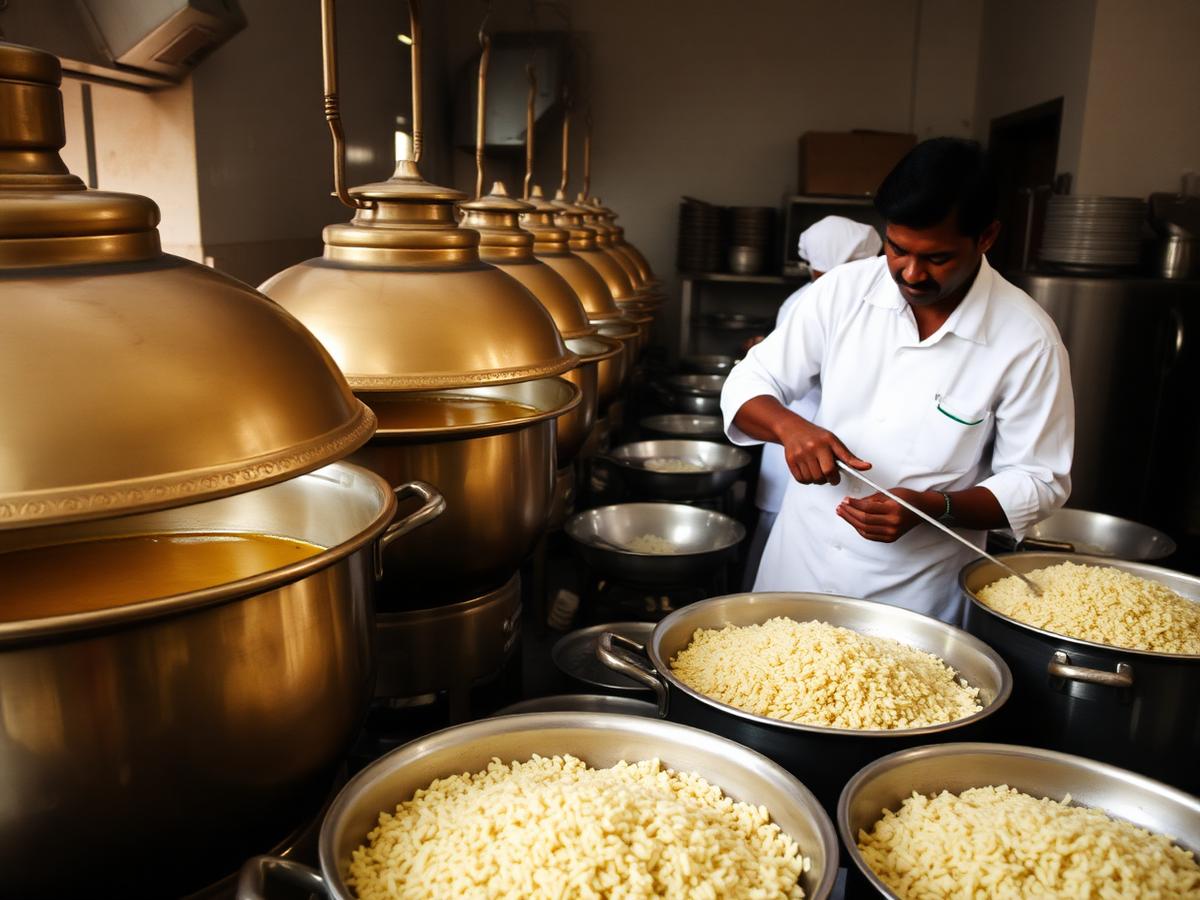
We arrive by 3 pm, set up the satvik station with separate vessels and begin with the prasadam list so it is ready before the pooja.
Step 2
Pooja concludes around 7 pm
Prasadam is distributed first. Guests are then seated as the pooja ends, not after, which keeps the whole meal inside a 90-minute window.
Step 3
Meal served by 7:30 pm
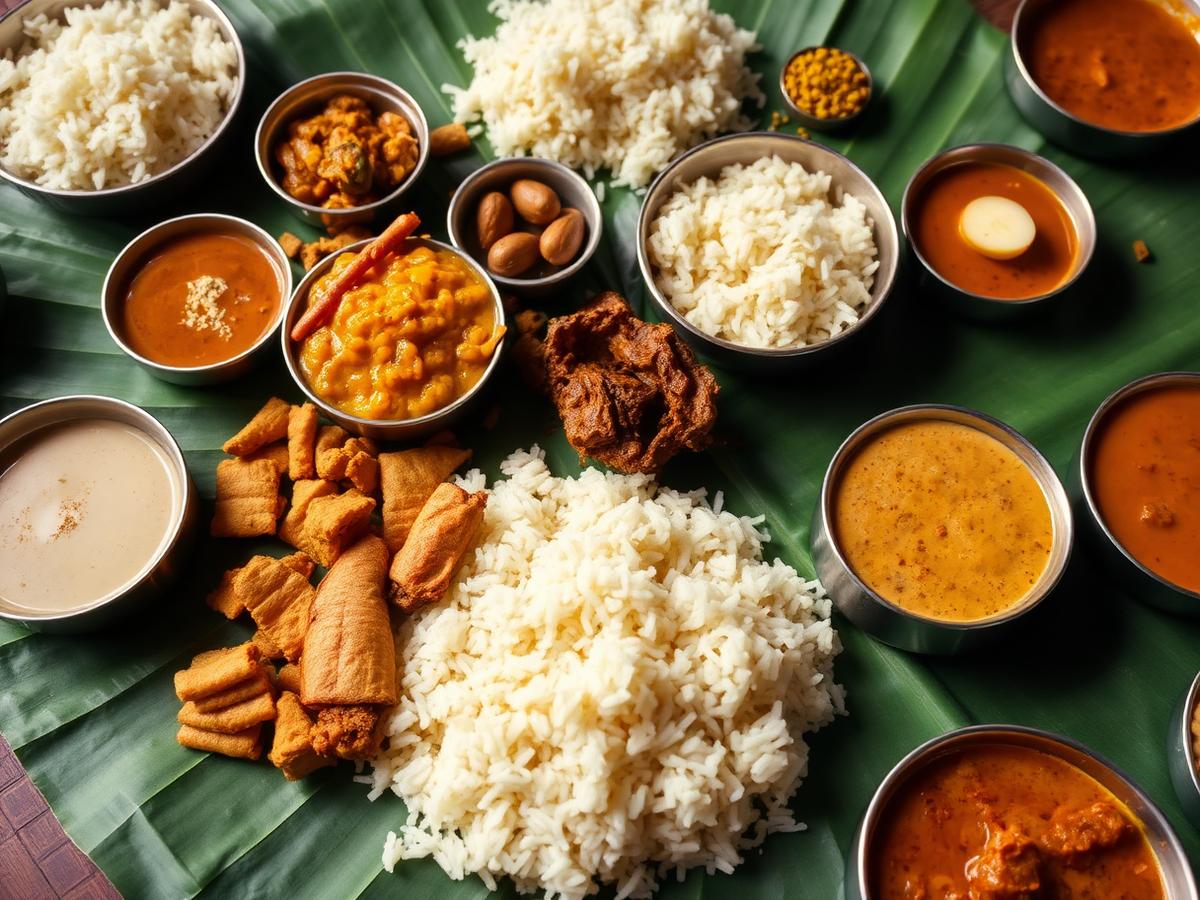
A devotional menu — rice, sambar, two kootus, palya, kosambari, appalam, payasam and fruit — served on plates or leaves depending on the family's custom.
Step 4
Closure by 9:30 pm
The kitchen clears and packs leftover prasadam separately for the family, which most households prefer to keep rather than mix with served portions.
If the family keeps Vijayadashami (20 October) as the closing celebration, the banana-leaf lunch from ₹420–₹750 per plate applies, with the same satvik discipline carried through.
Nine-day plan: how to sequence the orders
Navratri booking checklist
- Confirm the family's fasting rules (grains, salt, cooking fat) before the menu is locked
- Count daily prasadam boxes separately from guest meals — they repeat, the meals do not
- Book haldi-kumkum evenings by count per evening, not as a total across nine days
- Fix the Ashtami/Navami meal headcount 72 hours ahead, as with any pooja function
- Confirm delivery windows for office prasadam if you send boxes to staff
- Set aside one evening buffer for unexpected visitors — sundal scales up cheaply
For offices in Bengaluru that observe Navratri with a daily prasadam box for staff, a 20-person floor typically budgets ₹4,500–₹9,000 per day at ₹120–₹220 per box. Committing to the full nine days brings the per-box rate down and guarantees the same menu rotation.
Areas we serve in Bengaluru
We cook on site across Bengaluru. Pick your neighbourhood for local menus, pricing and venue notes:
- Yelahanka catering
- RT Nagar catering
- Kalyan Nagar catering
- Nagavara catering
- Hebbal & Kempapura catering
- Sahakarnagar catering
- Thanisandra catering
- Manyata Tech Park catering
Get a menu and quote for your date
Share your date, guest count and location — we will send a tailored pure-veg menu and per-plate quote the same day.
Frequently asked questions
- What can a caterer serve during Navratri fasting days?
- Fasting-safe menus avoid onion, garlic and, on strict days, regular rice and wheat. We cook with sabudana, samai (little millet), rajgira, singhare atta, fruits, milk and rock salt instead of regular salt. Because every family's vrat rules differ, we confirm the allowed list before the menu is locked.
- How much does Navratri catering cost in Bangalore?
- In 2026, expect ₹120–₹220 per vrat or prasadam box, ₹150–₹280 per person for haldi-kumkum tiffin and ₹380–₹650 per plate for the Ashtami or Navami devotional meal. A family of four with evening guests every second day typically spends ₹18,000–₹35,000 across the festival.
- Do you deliver prasadam boxes every day for all nine days?
- Yes. Daily prasadam delivery is priced as a nine-day commitment, which brings the per-box rate down 10–15% compared with separate day orders and keeps the same menu rotation and kitchen team throughout the festival.
- When should I book Navratri catering in Bangalore?
- Book by early October — for 2026, Navratri runs from October 11 to 20, and kitchen slots for the festival window fill first because every menu needs fasting-safe provisions purchased in advance. Two weeks ahead is usually the practical limit.
- Can half the family fast and half eat regular food?
- Yes, and this is common. We cook the vrat line in dedicated vessels with ghee and rock salt, and add a small separate rice-and-sambar line for non-fasting family members, staff or drivers. Mention this in the brief so both menus arrive properly separated.
About the author
Nandu Yadav
Chief Consultant & Owner, Upendar Caterers · 20 years in catering
Nandu Yadav is a veteran of the Bangalore catering industry with over 20 years of experience. He specializes in large-scale pure vegetarian event planning, traditional South Indian menu design, and per-plate costing for weddings and corporate events. Having managed over 5,000 successful functions across North Bangalore (Sanjaynagar, Sahakarnagar, Hebbal) and major tech parks, Nandu provides authoritative insights based on real-world logistical expertise.
- Pure Vegetarian Wedding Catering
- Per-plate Costing & Quantity Planning
- Traditional Brahmin & South Indian Menus
- Corporate Lunch Operations in Tech Parks
- On-site Kitchen Setup & Food Safety (FSSAI)
- Logistics for Large Events (5000+ guests)
Content review
Fact-checked by Nandu Yadav, Head Chef & Owner, Upendar Caterers · Last reviewed 23 September 2026
Menus, quantities and pricing on this page were reviewed against functions we cooked in Bengaluru in 2026.