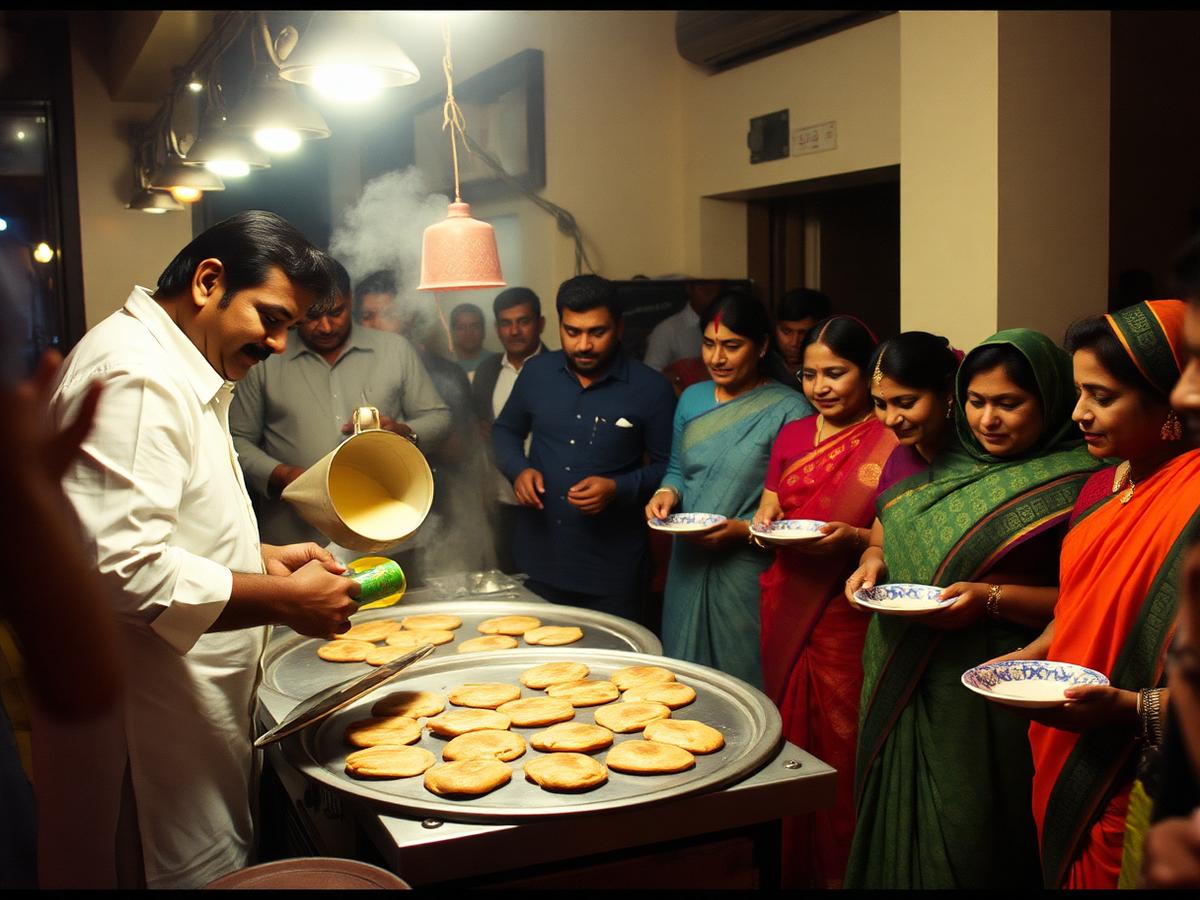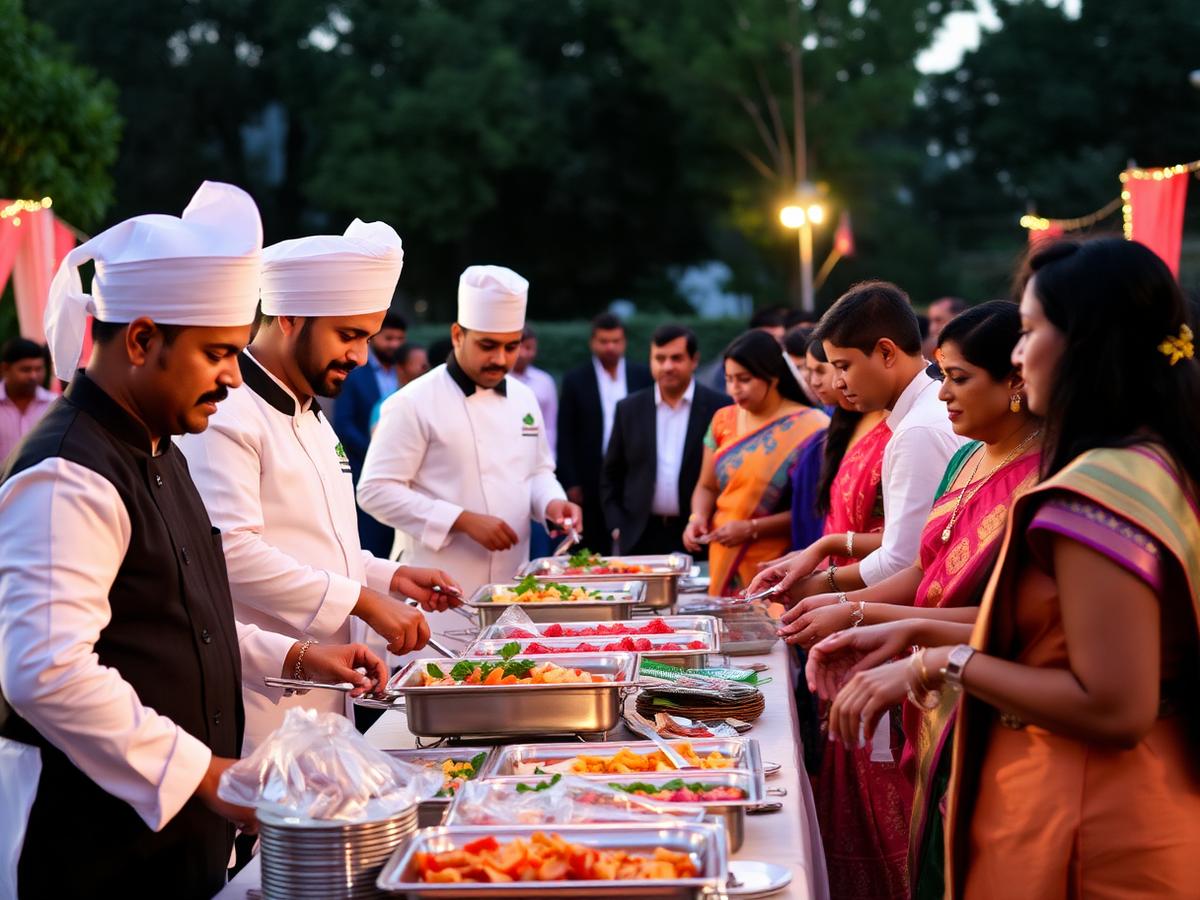
Rajasthani Wedding Catering in Bangalore: Marwari Menus & 2026 Costs
AI Overview
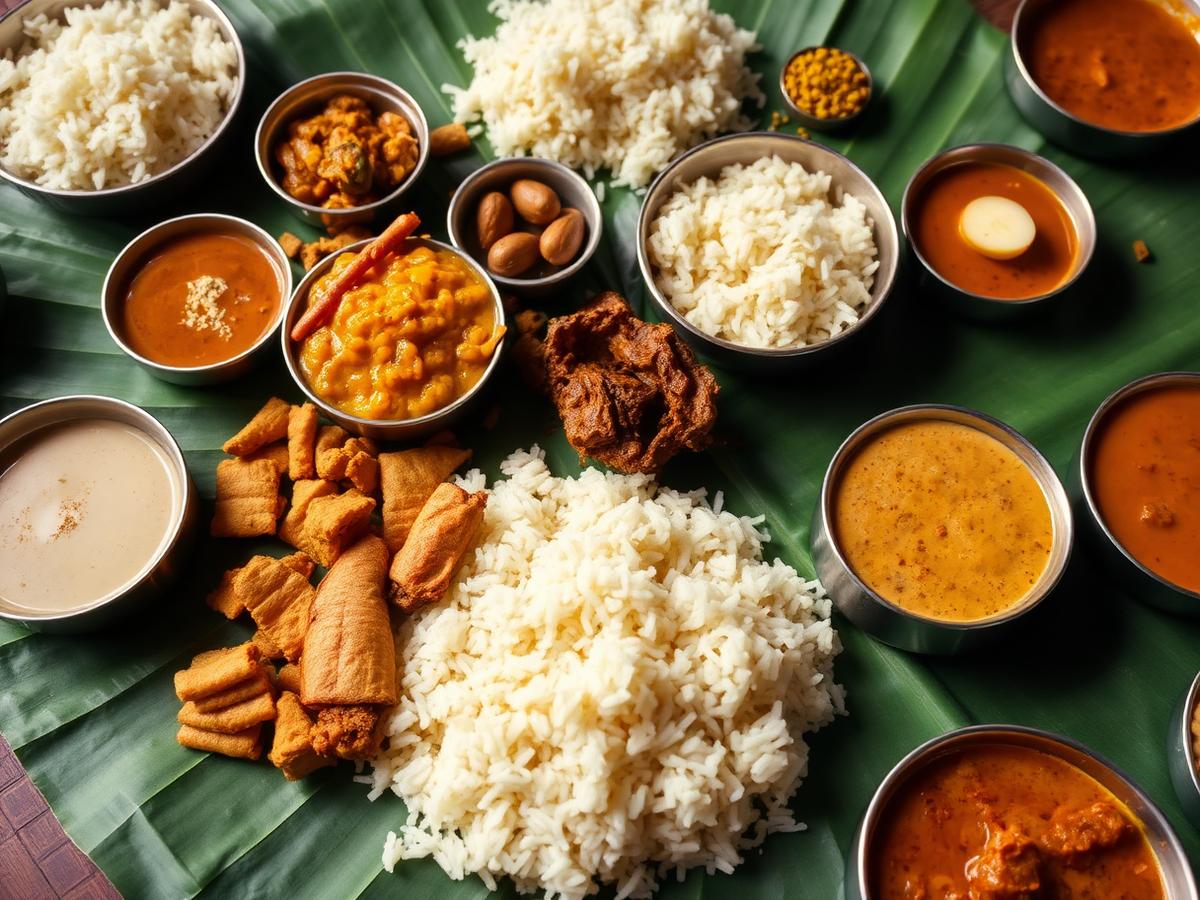
Rajasthani wedding catering in Bangalore typically needs a planning budget of ₹650–₹1,450 per plate in 2026 for a pure-vegetarian meal, depending on regional specialities, sweets and live service. A balanced Marwari wedding menu can include dal baati churma, gatte ki sabzi, ker sangri, phulka, rice and a lighter accompaniment. Confirm onion–garlic preferences, ingredient availability, baati finishing arrangements and service staffing before booking. Treat these bands as indicative: final costs depend on guest count, venue facilities and written inclusions.
Key takeaways
- Build the meal around a few well-made Rajasthani dishes rather than adding them to an oversized generic buffet.
- Use ₹650–₹1,450 per guest as an indicative 2026 planning range, not a fixed quotation.
- Marwari family preferences are not identical: confirm onion, garlic, roots, dairy and fasting requirements separately.
- Baati needs batch finishing and prompt service; a large pile held for hours loses its appeal.
- Cost ker sangri, ghevar, malpua and premium dry-fruit sweets explicitly rather than assuming they are standard inclusions.
- Approve serving portions, counter capacity and the number of sweets before increasing the item count.
Key takeaways
- Build the meal around a few well-made Rajasthani dishes rather than adding them to an oversized generic buffet.
- Use ₹650–₹1,450 per guest as an indicative 2026 planning range, not a fixed quotation.
- Marwari family preferences are not identical: confirm onion, garlic, roots, dairy and fasting requirements separately.
- Baati needs batch finishing and prompt service; a large pile held for hours loses its appeal.
- Cost ker sangri, ghevar, malpua and premium dry-fruit sweets explicitly rather than assuming they are standard inclusions.
- Approve serving portions, counter capacity and the number of sweets before increasing the item count.
1. Start with the Rajasthani meal your family actually wants
As the chef-owner of Upendar Caterers, a pure-vegetarian catering business operating since 1995, I start this conversation with the dishes the family considers essential. For one wedding, that may mean dal baati churma and gatte ki sabzi; for another, papad ki sabzi, ker sangri and freshly made phulkas matter more. A regional label alone is not a usable menu brief.
Marwari and Rajasthani menus overlap, but neither represents one fixed household tradition. I would ask both families to approve the core dishes, spice level and use of ghee before discussing additional counters. For a mixed Bengaluru guest list, familiar rice, roti and a mild vegetable dish can sit alongside the regional food without taking over the meal.
- Name three non-negotiable dishes and two dishes the family does not want.
- Decide whether dal baati churma is the main meal or a smaller tasting counter.
- Choose between a seated meal, a buffet or a hybrid with baati served by attendants.
- Identify one family member who can approve the regional taste at the tasting.
2. Indicative 2026 per-plate costs in Bengaluru
For initial budgeting, I would use the bands below for roughly 200–400 guests at one wedding meal. They assume a workable venue kitchen or finishing area, standard buffet equipment, crockery and service staff. These are planning estimates, not published fixed packages or a substitute for a site-specific quotation.
GST where applicable, venue kitchen charges, special electrical connections, transport, decorative counters and separate meals for vendors should be itemised. Smaller functions may have a higher per-plate cost because a specialist cook, oven and service team still need to be deployed.
- Illustration: 250 guests at ₹850 per plate gives a food-and-service subtotal of ₹2,12,500 before separately quoted charges.
- Ask whether pure ghee for baati and churma is included, and whether extra ghee is served by an attendant.
- Do not compare prices until the number of sweets, baati service method and staffing inclusions match.
| Meal format | Planning price per guest | Menu scope to discuss |
|---|---|---|
| Focused regional buffet | ₹650–₹850 | One welcome drink, dal baati churma, two vegetable dishes, one bread, rice and simple accompaniments; churma is the principal sweet. |
| Expanded Marwari wedding meal | ₹850–₹1,100 | One starter, dal baati churma, gatte, ker sangri subject to sourcing, fresh bread, rice, accompaniments and one additional sweet. |
| Speciality-led wedding service | ₹1,100–₹1,450 | Dedicated baati finishing and bread service, a broader regional selection, two additional desserts and enhanced staffing; exact scope must be written down. |
3. Two balanced pure-veg wedding menus
Dal baati churma is already substantial. My preference is to support it with contrasting textures and flavours rather than surround it with several creamy gravies. Gatte brings a besan-based gravy, ker sangri adds a distinctive dry preparation, and plain rice with kadhi offers a gentler alternative.
The sample menus below are alternatives, not two lists to combine. For a lunchtime ceremony, I would keep starters modest; for an evening wedding meal, one regional snack can work well if the main dinner begins on time. Ghevar and other delicate sweets need a sourcing and finishing plan, especially in damp weather.
- Focused wedding lunch: jaljeera; dal baati churma; gatte ki sabzi; a seasonal dry vegetable; phulka; steamed rice; Rajasthani kadhi; kachumber; roasted papad; pickle. Confirm the preferred kadhi style rather than assuming sweetness.
- Expanded evening meal: chaas; mini pyaaz kachori if onion is permitted, or moong dal kachori with a verified filling; dal baati churma; ker sangri; gatte ki sabzi; one mild vegetable dish; phulka; jeera rice; salad; papad; malpua with rabri.
- Alternative dessert: use ghevar instead of malpua, not automatically in addition to it. Confirm plain, malai or rabri-topped service and the portion size.
- Optional bread: bajra roti works best when the family specifically wants it and the venue can support fresh production. It is not a good token addition if it must sit on the buffet.
4. Put Marwari family preferences in writing
I never treat “Marwari”, “pure veg” and “no onion–no garlic” as interchangeable instructions. Some families use onion and garlic; others avoid them throughout the wedding or only for a particular ceremony. Restrictions may also differ between the main meal and food served to elders before the ceremony.
The approved menu should identify ingredients in gravies, kachori fillings, chutneys and spice pastes, not just the dish names. If a separate restricted meal is needed, agree on its utensils, preparation sequence, labelling and service point. A wedding menu is not the place to discover that two relatives understood the same food instruction differently.
- Confirm onion and garlic permission for every meal, including snacks and condiments.
- Ask separately about potatoes and other roots; do not infer restrictions from community identity.
- Specify whether ghee, milk, curd, paneer and rabri are acceptable for all guests.
- Declare wheat, milk, nuts and other relevant allergens; pure vegetarian food is not automatically allergy-safe.
- If the venue has a shared kitchen, inspect work surfaces, storage and equipment before promising any segregation arrangement.
5. Portion planning for dal baati churma and its accompaniments
For a buffet with several alternatives, I plan tasting-sized first servings with replenishment, not a full independent portion of every dish for every guest. The figures below are starting allocations per adult when dal baati churma is the main attraction. All weights are cooked, ready-to-serve weights unless stated otherwise; they are not raw purchase quantities.
Guest age, meal timing and the number of other dishes change consumption. After those are confirmed, I would usually plan a 5–8% food-production buffer over the agreed meal count, while keeping the billing guarantee separate. Children should not automatically be counted as half portions without looking at their ages.
- If baati is only a tasting counter, reduce the starting allocation to one small baati of about 40–45 g per guest and rebalance the main meal.
- If the family chooses both gatte and ker sangri, divide the vegetable allocation between them instead of doubling it.
- Keep extra ghee controlled and optional; guests differ considerably in how much they want.
- Confirm the baati size at the tasting: “two pieces” is not a meaningful quantity without a weight.
| Item | Quantity per guest | Planning note |
|---|---|---|
| Baati | 80–100 g | About two small pieces; finish in batches and keep additional pieces available for seconds. |
| Dal | 150–180 g | Allow enough to accompany broken baati rather than serving it as a token ladle. |
| Churma | 40–50 g | A smaller portion is usually sufficient when another dessert is offered. |
| Serving ghee | 10–15 g | Additional to recipe ghee already used in baati and churma; confirm guest preference. |
| Vegetable dishes combined | 120–150 g | Split between gatte, ker sangri or the chosen seasonal vegetable. |
| Phulka | 30–50 g | Roughly one to two small phulkas as an alternative to baati. |
| Cooked rice | 70–90 g | A secondary starch in this menu, not a rice-led meal allocation. |
| Kadhi, if included | 80–100 g | Keep the initial batch modest when dal is the main accompaniment. |
| Additional dessert | 40–60 g | For example, a small malpua-and-rabri serving alongside churma. |
6. Keep baati fresh: staffing, counters and meal timing
Baati service is the operational centre of this menu. The dough and baking method must produce a cooked centre, while final warming and ghee service need to happen close to eating. I would not approve a “live baati counter” until the venue confirms the oven or fuel arrangement, ventilation and permission for on-site cooking.
For a 250-guest buffet spread over 75–90 minutes, a useful starting plan is 10–12 front-of-house staff: roughly one for every 25 guests, plus a captain and floating support. The baati finishing team, bread cooks and washing crew are additional. A 2–3-person baati team is a starting point to validate against the equipment and a timed trial, not a guaranteed output rate.
If most guests arrive together after the ceremony, use two dal-and-baati serving points fed by one controlled finishing area. Hold hot dal and gravies at 65°C or above and dairy desserts at 5°C or below until service, checking with a food thermometer. Refill with small fresh batches rather than topping up an old tray indefinitely.
- For a 12:30 pm lunch, secure kitchen and equipment access by about 8:30–9:00 am, or earlier if the venue requires substantial cooking on site.
- By 11:30 am, check dal consistency, gravy seasoning, dessert refrigeration and the first baati batch.
- From 12:10 pm, start the final baati warming and finishing sequence; replenish in approximately 10–15-minute batches according to demand.
- Keep churma portioning and optional ghee service beside the baati point so guests do not cross the queue.
- For a fully seated meal, plan approximately one server per 10–12 guests, with separate runners for bread, dal and second helpings.
7. Taste the complete combination before you book
A tasting should test the meal as guests will eat it: baati with dal and ghee, followed by churma, rather than each component in isolation. I would check whether the baati centre is cooked, whether dal remains pleasant after brief holding, whether gatte stays tender and whether the dry vegetable is too salty beside papad and pickle.
For a speciality-led wedding meal, aim to settle the core menu 6–8 weeks before the function where possible. Confirm ker sangri and dessert sourcing 10–14 days ahead, then agree on the final guest guarantee and dietary split around 5–7 days before service, subject to the booking terms. Lock the service window, permitted substitutions and extra-plate billing method in writing.
To discuss a pure-vegetarian Rajasthani wedding menu with Upendar Caterers, call 9661650666. Our official office and kitchen address is Coffee Board Layout, Nagavara, Bengaluru, Karnataka 560024. Share the wedding date, venue, estimated guest count and essential family dishes so we can scope the menu before quoting.
- Ask for the exact sweet specification, including whether rabri, nuts and premium toppings are included.
- Record whether baati is baked on site, brought partly prepared or reheated, and what equipment supports that method.
- Approve any alternative to ker sangri in advance; do not leave substitutions to the wedding morning.
- Confirm charges for staff overtime if rituals delay the meal.
- Request separate counts and service arrangements for family meals outside the main wedding sitting.
Areas we serve in Bengaluru
We cook on site across Bengaluru. Pick your neighbourhood for local menus, pricing and venue notes:
- Yelahanka catering
- RT Nagar catering
- Kalyan Nagar catering
- Nagavara catering
- Hebbal & Kempapura catering
- Sahakarnagar catering
- Thanisandra catering
- Manyata Tech Park catering
Get a menu and quote for your date
Share your date, guest count and location — we will send a tailored pure-veg menu and per-plate quote the same day.
Frequently asked questions
- How much does Rajasthani wedding catering cost in Bangalore in 2026?
- For planning, allow approximately ₹650–₹1,450 per guest for a pure-vegetarian wedding meal, depending on the menu, sweets and service format. These indicative bands suit roughly 200–400 guests with workable venue facilities, rather than every function size. Ask for a written quotation showing taxes, transport, venue charges and specialist counters separately.
- Can a Marwari wedding menu be made without onion and garlic?
- Yes, dal, gatte ki sabzi, kadhi, ker sangri and several other dishes can be prepared without onion and garlic. The restriction must also cover fillings, chutneys, spice pastes and garnishes. If some guests have additional restrictions on roots or dairy, record those separately instead of treating them as part of one general instruction.
- Is dal baati churma enough as the main wedding meal?
- It can be the centre of a satisfying meal, but I would add a vegetable dish, simple bread or rice, and lighter accompaniments for guests who prefer smaller portions of baati. Two small baatis totalling about 80–100 g, 150–180 g dal and 40–50 g churma per adult are useful starting allocations when other dishes are available. Keep second helpings ready and adjust after reviewing the guest profile.
- Can you serve ker sangri and ghevar at a Bengaluru wedding?
- These can be included if suitable ingredients or finished products can be sourced and their quality approved before the event. Ker sangri needs an agreed preparation style, while ghevar needs careful storage and topping close to service. Ask the caterer to confirm availability, price and an approved alternative in writing rather than relying on a verbal promise.
- Should we choose a buffet or seated service for a Rajasthani wedding meal?
- A buffet offers flexibility for a mixed guest list, but baati benefits from attendants who can manage portions, dal and optional ghee. Seated service can suit families who prioritise personal serving and second helpings, provided there are enough runners and fresh-bread capacity. As starting ratios, allow roughly one buffet service staff member per 25 guests, or one seated-meal server per 10–12 guests, with kitchen teams and runners planned separately.
- Can we combine Rajasthani dishes with food familiar to local guests?
- Yes, but keep the regional meal recognisable rather than adding a second complete buffet. A mild vegetable dish, phulka and plain rice often provide enough alternatives alongside dal baati churma and gatte. If the family requests curd rice or another familiar dish, replace a less important item instead of automatically increasing the spread.
About the author
Nandu Yadav
Chief Consultant & Owner, Upendar Caterers · 20 years in catering
Nandu Yadav is a veteran of the Bangalore catering industry with over 20 years of experience. He specializes in large-scale pure vegetarian event planning, traditional South Indian menu design, and per-plate costing for weddings and corporate events. Having managed over 5,000 successful functions across North Bangalore (Sanjaynagar, Sahakarnagar, Hebbal) and major tech parks, Nandu provides authoritative insights based on real-world logistical expertise.
- Pure Vegetarian Wedding Catering
- Per-plate Costing & Quantity Planning
- Traditional Brahmin & South Indian Menus
- Corporate Lunch Operations in Tech Parks
- On-site Kitchen Setup & Food Safety (FSSAI)
- Logistics for Large Events (5000+ guests)