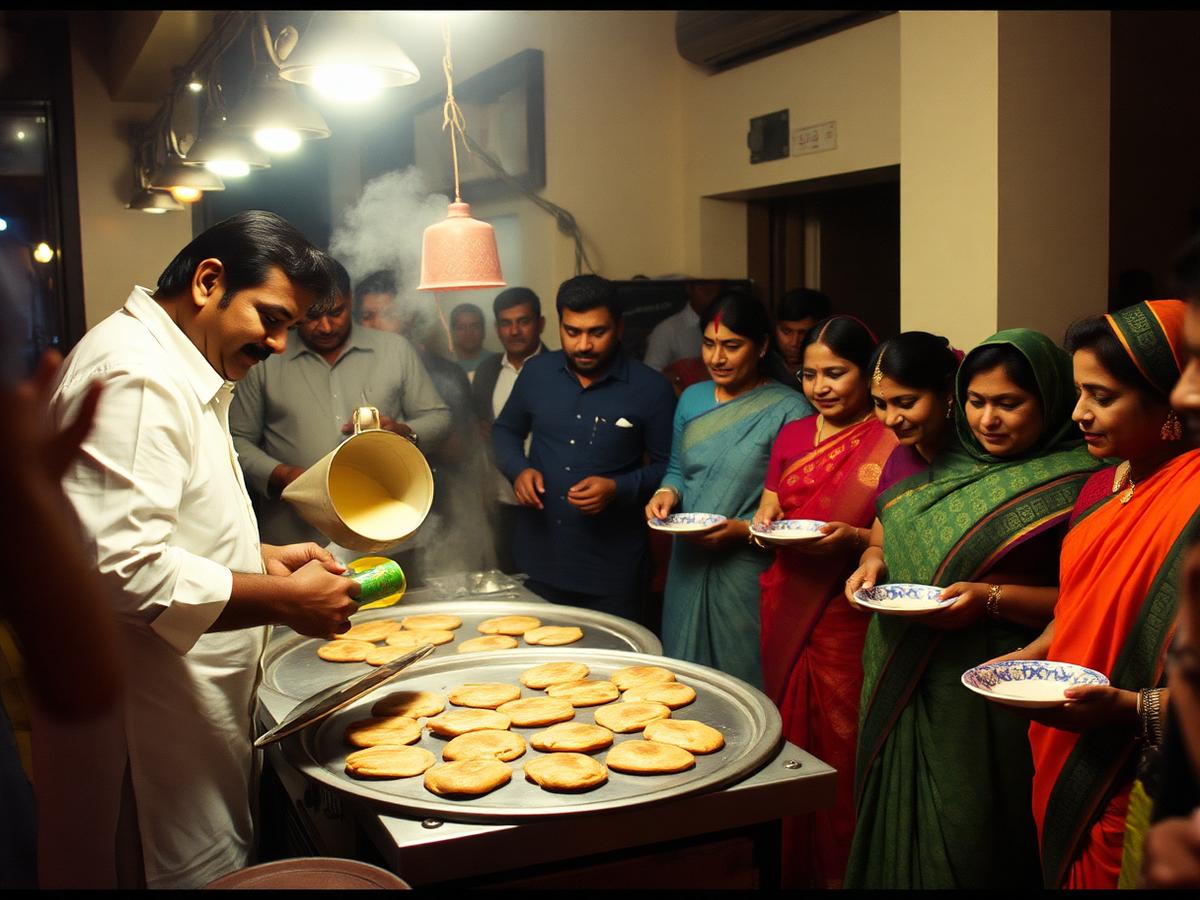
Sangeet Night Catering in Bangalore: Starters, Live Counters & Staffing
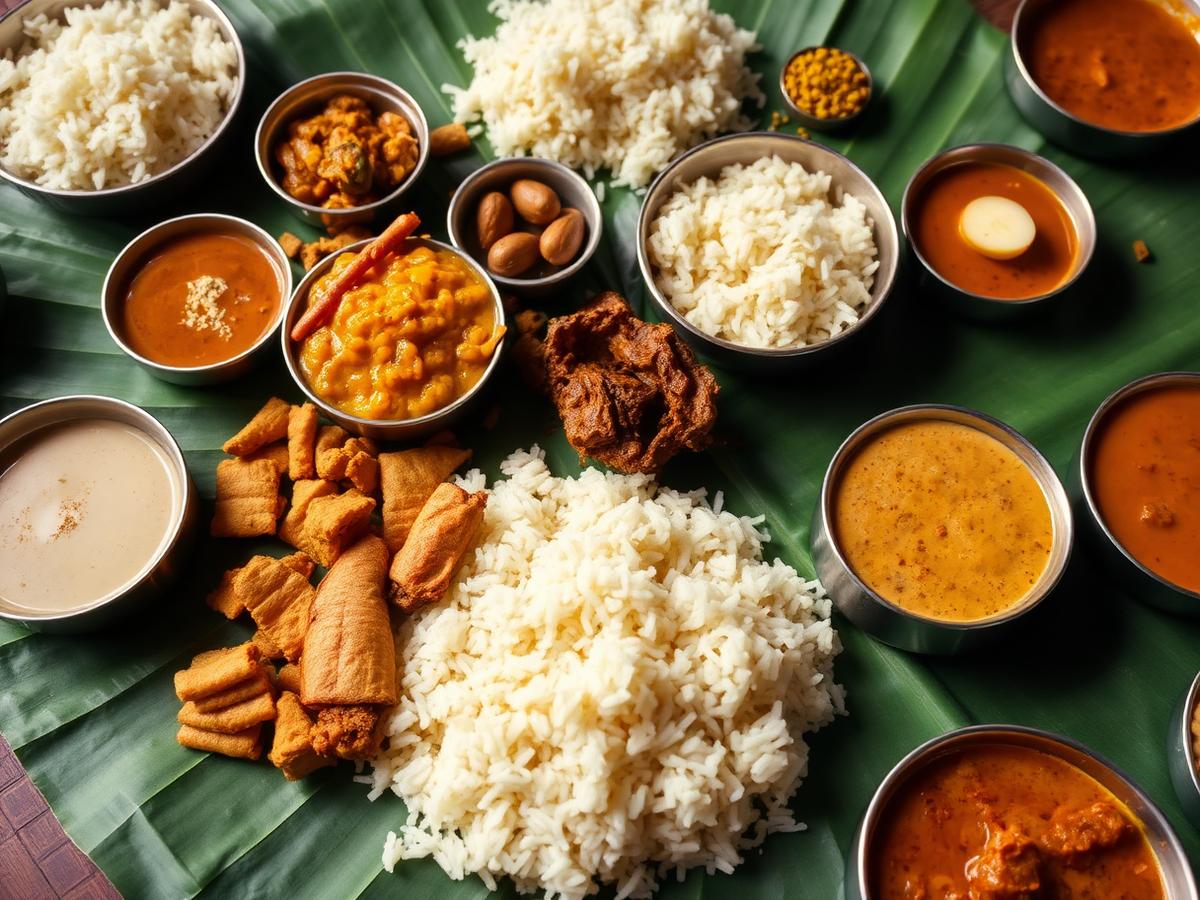
AI Overview
Sangeet night catering in Bangalore works best with a controlled starter round, one or two quick live counters and a compact dinner served around performances. For 2026 budgeting, allow approximately ₹650–₹1,450 per guest for pure vegetarian food and service, depending on menu, counters and duration; confirm taxes and inclusions separately. Plan 120–160 g of starters per adult, keep a proper dinner available before the programme ends, and budget for roaming servers, counter teams and clearing staff separately.
Key takeaways
- Use a 60–75-minute starter window rather than promising unlimited tray service throughout the programme.
- For a starter-led evening with dinner, plan 120–160 g of cooked starters per adult, not a full serving of every variety.
- Choose live counters for quick handover and easy eating; elaborate customisation can interrupt the evening with queues.
- Start with one roaming server per 25–30 guests during the starter round, with separate clearing and counter teams.
- Agree on dinner opening, last fresh-food orders and overtime charges before confirming the booking.
- A delayed performance should not mean repeatedly reheating the same food or leaving late guests without dinner.
Key takeaways
- Use a 60–75-minute starter window rather than promising unlimited tray service throughout the programme.
- For a starter-led evening with dinner, plan 120–160 g of cooked starters per adult, not a full serving of every variety.
- Choose live counters for quick handover and easy eating; elaborate customisation can interrupt the evening with queues.
- Start with one roaming server per 25–30 guests during the starter round, with separate clearing and counter teams.
- Agree on dinner opening, last fresh-food orders and overtime charges before confirming the booking.
- A delayed performance should not mean repeatedly reheating the same food or leaving late guests without dinner.
1. What should a sangeet catering budget cover in 2026?
At Upendar Caterers, our pure vegetarian catering business operating in Bengaluru since 1995, I plan a sangeet around how guests move: arrival, mingling, watching performances and finally sitting down to eat. The catering requirement is different from a dinner where everyone approaches the buffet together.
The following are indicative 2026 planning bands, not fixed package quotations. They assume approximately 150–250 guests, one evening at one venue and an agreed service window. Smaller gatherings, difficult kitchen access and extended late-night service can increase the effective per-guest cost.
- Ask whether the quote includes crockery, counter equipment, transport, service staff, cleaning support and applicable GST.
- Separate the food-service closing time from the team's pack-up time; they are not the same.
- For 200 guests at ₹950 per plate, the base calculation is ₹1,90,000 before anything explicitly excluded from the quote.
| Service format | Planning price per guest | Scope to request in the quotation |
|---|---|---|
| Compact evening | ₹650–₹850 | Three starter varieties, a compact dinner and one dessert; no dedicated live counter |
| Starter-led sangeet | ₹850–₹1,100 | Four starter varieties, one quick live counter, compact dinner and two dessert choices |
| Extended evening | ₹1,100–₹1,450 | Four or five starter varieties, two live counters, dinner and a separately timed late snack; longer staffing window specified |
2. Build food service around the performance schedule
My first question is when the family expects the main performances to begin—not how many dishes they want. If food opens just as everyone faces the stage, trays either go unnoticed or servers obstruct the view. Ask the host or event coordinator to share the running order with the catering captain.
For a 7 pm arrival, I would use the schedule below as a starting point. Keep dinner accessible to children and elders before the final performance; nobody should have to wait until 10.30 pm for a proper meal.
- During speeches, family dances and photography cues, stop tray movement across the stage sightline.
- Allow 15–20 minutes of flexibility around major programme changes, but keep the kitchen informed through one coordinator.
- Confirm venue food-service and access deadlines before promising a midnight snack.
| Time | Food-service action | Why it helps |
|---|---|---|
| 5.30–6.30 pm | Complete setup, equipment checks and a counter trial | Identifies power, lighting and handover problems before guests arrive |
| 7–8.15 pm | Run welcome drinks and staggered starter rounds | Feeds arriving guests without putting every variety out at once |
| 7.30–9.30 pm | Operate the agreed live counter with pauses in tray circulation | Lets guests choose when to eat without disrupting performances |
| 8.30–10.15 pm | Open dinner, starting with a clearly accessible service point | Supports early diners and guests eating after performances |
| 10.15 pm | Check remaining diners and announce last fresh-food orders discreetly | Prevents an abrupt shutdown |
| 10.45–11.15 pm, if booked | Serve one small late-night snack | Provides a fresh finish without reopening the entire dinner |
3. Choose starters guests can actually eat while standing
I prefer three or four distinct starters over a long list of similar fried items. A practical combination is paneer tikka, mini vegetable cutlets and crisp baby corn, with mini idli podi skewers as an optional fourth choice. Keep sauces controlled, provide an easy place to discard skewers and use small plates for anything crumbly.
The quantities below are cooked or ready-to-serve edible weights per adult for one combined evening menu. They are category totals, not amounts for each dish. Start near the lower end when attendance is late or dinner is light, and move upwards when the gathering begins early with a long dancing programme.
- Plan approximately four to five starter pieces per adult in total, then check their actual weight at the tasting.
- Across four starter varieties, 200 adults need roughly 800–1,000 pieces overall—not 800 pieces of each variety.
- Keep at least one mild starter and identify dairy, gluten, nuts and other relevant allergens on the service briefing.
- Avoid counting children as a fixed fraction without checking their ages and the number of teenagers.
| Food category | Per adult | For 200 adult-equivalent guests |
|---|---|---|
| Tray-served starters, all varieties combined | 120–160 g | 24–32 kg |
| Live-counter food, averaged across all guests | 80–120 g | 16–24 kg |
| Dinner, including breads, rice, accompaniments and gravies | 350–450 g | 70–90 kg |
| Dessert, all choices combined | 60–80 g | 12–16 kg |
| Optional late snack, for expected takers only | 80–100 g | 6.4–8 kg if 80 guests are expected to eat |
4. Select live counters for speed, not just theatre
For a sangeet, a live counter should hand over food quickly and let guests return to the programme. My preferred options are a tightly edited chaat counter or mini pav bhaji: both can be portioned in small servings without asking each guest several questions. A made-to-order dosa or customised pasta counter needs more cooking capacity and a suitable queue area.
For 200 guests, begin by evaluating one counter with two handover points, or two different compact counters. Do not assume that two named counters automatically provide enough capacity. Ask the team to demonstrate how many finished portions it can hand over in ten minutes with the proposed equipment and staff.
- Limit a chaat counter to two options, with mild and spicy finishing choices rather than a long customisation list.
- For mini pav bhaji, plan a tasting portion of roughly 100–120 g including the pav; the whole-crowd average will be lower if not everyone takes it.
- If 100 portions are likely to be requested in 20 minutes, the counter needs to sustain five handovers a minute. Validate that before the event.
- Position queues away from the dance floor, stage approach, exits and dinner entrance.
- Keep frying, smoke and hot equipment out of guest circulation, subject to venue approval.
5. Staff the starter round, counters and clearing separately
A sangeet can look adequately staffed while still having poor service: everyone is carrying starters, but nobody is collecting used plates or refilling water. I assign separate responsibilities for guest circulation, food handover and clearing. One catering captain should take instructions from the family's nominated coordinator.
For tray service, start with one roaming server per 25–30 guests. For clearing during a standing-food period, allow approximately one attendant per 40–50 guests. These are planning ratios; spread-out seating, stairs or a distant wash area require more support.
- A counter cook should not also be expected to manage used plates or leave the station for supplies.
- Brief servers on performance pauses, vegetarian ingredient information and where guests can find drinking water.
- Ask for a role-wise staffing sheet, not simply a promise of 'sufficient staff'.
- Confirm that staff meals, transport and any late-shift arrangements are covered in the commercial terms.
| Role | People | Primary responsibility |
|---|---|---|
| Catering captain | 1 | Coordinates programme cues, food release and closing |
| Roaming starter servers | 8 | Cover assigned guest zones; redeploy after the starter window |
| Live-counter teams | 4 | One cook or assembler and one handover assistant per compact counter |
| Clearing attendants | 4 | Collect used serviceware and maintain guest-area tidiness |
| Buffet attendants | 2 | Manage dinner replenishment and handover |
| Dedicated runner | 1 | Moves supplies between the kitchen and service points |
| Total allocated to these roles | 20 | Excludes the main production kitchen, dishwashing team and any separate beverage station |
6. Keep late-evening food fresh and the working area safe
Late service needs smaller replenishments, not one large display expected to last all evening. I plan starter finishing in short batches and keep reserve dinner food under controlled holding conditions. A covered vessel alone is not proof that food is being held safely.
Use a probe thermometer and recorded checks: maintain hot food at 65°C or above and chilled food at 5°C or below. Where reheating is appropriate, bring the food to a core temperature of at least 75°C; do not repeatedly cool and reheat it. If safe holding cannot be maintained, follow the caterer's documented time-control and discard procedure.
- Keep paneer starters, dairy-based desserts and chutneys under appropriate temperature control until service.
- Use smaller service trays and replace them cleanly instead of continually topping up old food.
- Confirm potable water, handwashing access, waste collection and a protected preparation area.
- For an outdoor Bengaluru venue, agree on a covered service fallback and safe electrical routing before setup.
- Provide working lights at counters and the kitchen even when the guest area uses dim stage lighting.
- Keep any late-night snack ingredients separately reserved and safely stored; do not build the snack from food that has sat on the buffet.
7. Put the late-night scope in writing before booking
The biggest avoidable disagreement is usually about what 'service till late' means. Write down the starter window, counter hours, dinner opening, last fresh-food order and final service closure. Also state whether an extension means keeping the existing buffet open, cooking fresh snacks or retaining the entire service team.
For a tailored pure vegetarian sangeet quotation from Upendar Caterers, call 9661650666 with the guest count, venue access details and programme timings. Our official office and kitchen address is Coffee Board Layout, Nagavara, Bengaluru, Karnataka 560024.
- Confirm the guaranteed guest count, the deadline for revisions and the rate for approved additional guests.
- Record each starter variety, total service window and any portion or replenishment limits.
- List counter equipment, power requirements and venue permissions for cooking or fuel.
- Specify overtime as a written amount per hour or agreed extension block, with the staff and food included.
- Identify who can authorise extra food or extended service on the night.
- Agree on a safely held meal allocation for family members or performers who will eat last.
Areas we serve in Bengaluru
We cook on site across Bengaluru. Pick your neighbourhood for local menus, pricing and venue notes:
- Yelahanka catering
- RT Nagar catering
- Kalyan Nagar catering
- Nagavara catering
- Hebbal & Kempapura catering
- Sahakarnagar catering
- Thanisandra catering
- Manyata Tech Park catering
Get a menu and quote for your date
Share your date, guest count and location — we will send a tailored pure-veg menu and per-plate quote the same day.
Frequently asked questions
- How much does pure veg sangeet night catering cost in Bangalore?
- For 2026 planning, allow approximately ₹650–₹1,450 per guest, depending on starters, live counters, dinner scope and service duration. A starter-led menu with one quick live counter can be budgeted at roughly ₹850–₹1,100 per guest. These are indicative bands, so request a written quotation showing staffing, equipment, transport, overtime and applicable taxes.
- How many vegetarian starters should we choose for a sangeet?
- Three or four well-chosen varieties are generally easier to serve consistently than a long list. For an evening that also includes a counter and dinner, start with 120–160 g of cooked starters per adult, or approximately four to five suitably sized pieces in total. Include different textures and at least one mild option rather than several similar fried snacks.
- Are two live counters enough for 200 guests?
- They can be, provided their production and handover capacity matches the expected rush. Two slow, individually customised counters may create longer queues than one fast counter with two serving points. Ask for a timed trial and assess the busiest 20-minute period rather than dividing attendance across the whole evening.
- Should dinner wait until all the sangeet performances are over?
- No; keep dinner available before the programme finishes, especially for children, elders and guests who arrived early. With a 7 pm arrival, an 8.30 pm dinner opening is a useful starting point, adjusted to the family's schedule. Pause tray movement near the stage during key performances without shutting down access to food elsewhere.
- How many catering staff do we need for a 200-guest sangeet?
- For the starter round, plan around eight roaming servers, supported by approximately four clearing attendants. An example with two compact live counters also needs four counter staff, two buffet attendants, one runner and one captain: 20 people in these allocated roles. Main kitchen production, dishwashing and a separate beverage station are additional, and a spread-out venue may need more staff.
- Can we arrange vegetarian snacks after 11 pm?
- Yes, subject to venue permissions, kitchen access and a service extension agreed in advance. Choose one manageable item, such as mini idlis with sambar or a small pav bhaji portion, and plan approximately 80–100 g per expected taker rather than for the full original guest count. Confirm the last-order time, fresh preparation arrangements and overtime charge before booking.
About the author
Nandu Yadav
Chief Consultant & Owner, Upendar Caterers · 20 years in catering
Nandu Yadav is a veteran of the Bangalore catering industry with over 20 years of experience. He specializes in large-scale pure vegetarian event planning, traditional South Indian menu design, and per-plate costing for weddings and corporate events. Having managed over 5,000 successful functions across North Bangalore (Sanjaynagar, Sahakarnagar, Hebbal) and major tech parks, Nandu provides authoritative insights based on real-world logistical expertise.
- Pure Vegetarian Wedding Catering
- Per-plate Costing & Quantity Planning
- Traditional Brahmin & South Indian Menus
- Corporate Lunch Operations in Tech Parks
- On-site Kitchen Setup & Food Safety (FSSAI)
- Logistics for Large Events (5000+ guests)