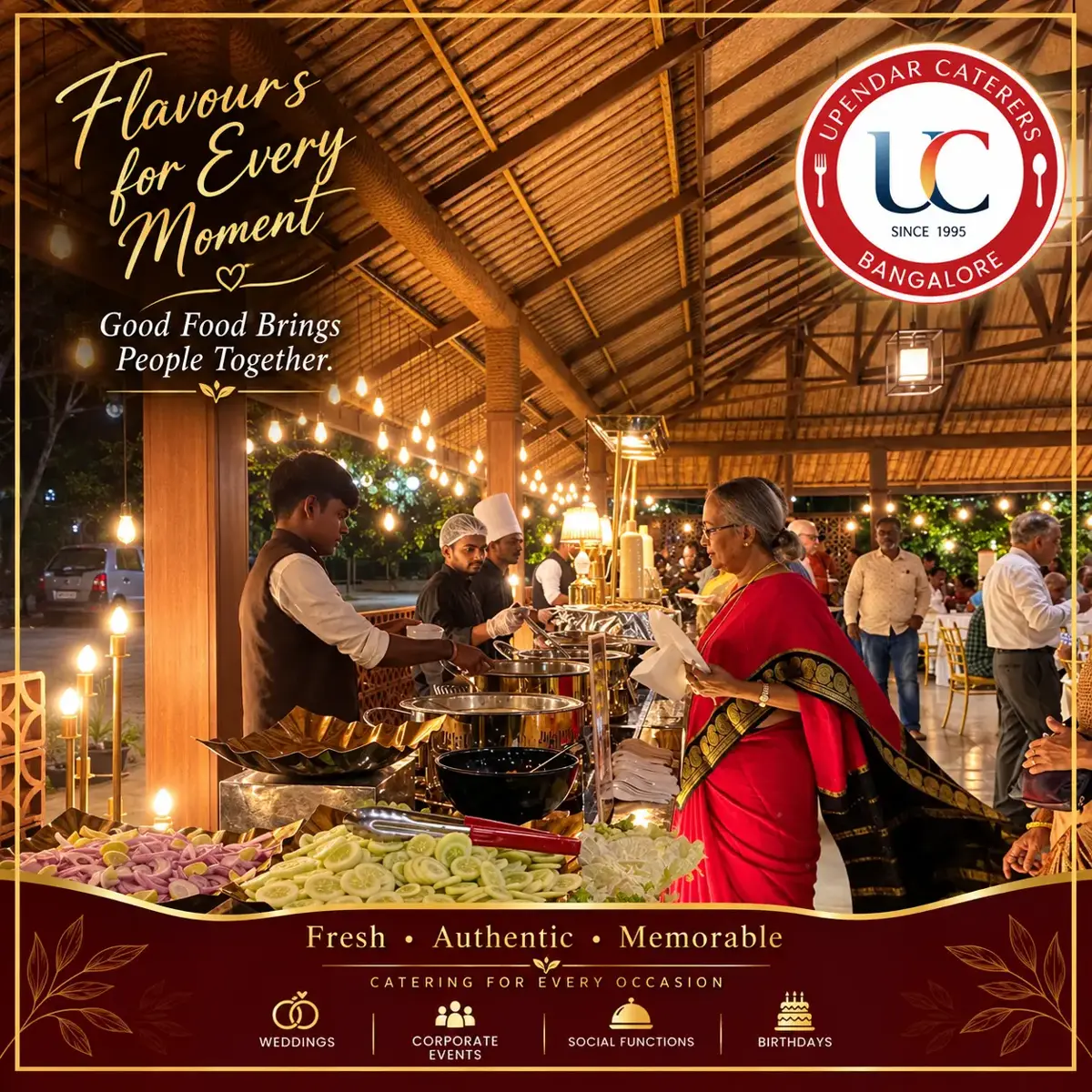
Summer Wedding Menu in Bangalore: Cooling Dishes and Safe Food Holding

AI Overview
For a summer wedding menu in Bangalore, choose a compact vegetarian spread with neer majjige, kosambari, modest portions of rice and gravies, chilled curd rice and one well-managed dessert. Budget approximately ₹450–₹950 per guest in 2026, depending on the menu and service setup. Keep cold food at 5°C or below and hot food at 65°C or above. Serve perishables in small, replenished batches, provide drinking water separately and confirm refrigeration before choosing an outdoor buffet.
Key takeaways
- Build a lighter meal, not a longer menu: one welcome drink, one starter, balanced mains and one or two small desserts.
- Curd rice, cut fruit and milk-based sweets need reliable refrigeration; a cooling taste does not make food safe in the heat.
- Use 2026 planning bands of ₹450–₹950 per guest, with cold-chain equipment and venue-related charges confirmed separately.
- Hold cold food at 5°C or below and hot food at 65°C or above, checking the food itself with a clean probe thermometer.
- Put out approximately 15–20 minutes of expected demand at a time and replenish from temperature-controlled reserves.
- Keep drinking-water access away from the main food queue, especially when ceremonies finish close to lunchtime.
1. Plan for the serving conditions before choosing dishes
As the chef-owner of Upendar Caterers, a pure vegetarian business operating since 1995, I start a summer wedding discussion with the serving time and venue setup—not the number of dishes. A shaded lunch with a working kitchen needs a different plan from a lawn buffet where food must travel across the property.
Bengaluru can have warm afternoons even when the morning feels comfortable. For an outdoor lunch, I prefer familiar dishes in smaller portions, fewer fried items and a shorter service window. For an evening reception, a richer dish can stay, but refrigeration and hot holding are still necessary.
- Confirm whether guests will eat indoors, under a covered structure or on an open lawn.
- Check the expected gap between food reaching the venue and the first guest being served.
- Inspect refrigeration, safe electrical connections, drinking-water access and the distance from kitchen to buffet.
- If the ceremony can overrun, agree on a holding plan rather than arranging the entire meal early.
- Keep water, seating and the route to the dining area easy for elders and children to find.
2. A balanced summer wedding lunch, with useful portion targets
My preferred summer plate has a refreshing start, a restrained fried item, one substantial vegetable or paneer dish and a curd-based finish. Pepper-heavy rasam, very rich gravies and several fried accompaniments need not all appear in the same meal.
The quantities below are starting production allowances per adult for one complete lunch, not unlimited portions of every alternative. Food weights are cooked or ready-to-serve weights; drinks are measured in millilitres. Adjust after confirming the guest mix, service style and whether another meal follows.
| Course | Suggested dish | Starting quantity per adult | Summer service note |
|---|---|---|---|
| Welcome drink | Neer majjige OR fresh lime water | 180–200 ml | Use potable water and ice; keep dairy drinks at 5°C or below |
| Fresh accompaniment | Cucumber–moong dal kosambari | 40–50 g | Prepare hygienically, refrigerate and replenish in small bowls |
| Starter | Mini vegetable cutlet | 40–50 g | Serve freshly cooked; avoid a long display of fried snacks |
| Bread | Phulka | 2 small pieces; about 50–60 g total | Prepare in short runs close to service |
| Vegetable and gravy | Beans–carrot palya plus light paneer gravy | 70–80 g palya plus 80–90 g gravy | Use less oil and cream; hold hot |
| Rice | Steamed rice OR mild vegetable pulao | 150–180 g | Choose one principal rice rather than several competing varieties |
| Dal accompaniment | Sambar OR moong dal | 120–150 g | Keep seasoning balanced and maintain hot holding |
| Curd finish | Curd rice | 80–100 g | Keep chilled until serving; do not leave a large vessel on the table |
| Sweet | Small holige OR chilled mango shrikhand | 45–60 g | Choose shrikhand only with a dependable cold chain |
3. Choose cooling dishes without overloading dairy, sugar or raw food
Neer majjige, cucumber kosambari and curd rice make a summer menu feel refreshing. They do not cancel the effects of heat, and they are not substitutes for drinking water. I usually choose one welcome drink rather than offering buttermilk, lassi, juice and a thick milkshake together.
Mango works well as a seasonal accent, but availability and ripeness should decide the final dish. Mango shrikhand or aamras can replace another dessert; there is no need to add both to an already sweet-heavy meal. Confirm fruit quality nearer the function instead of promising a particular variety months ahead.
For an outdoor wedding without proper refrigeration, remove chilled dairy desserts and cut-fruit displays. A freshly served small holige or another suitable cooked sweet is easier to manage, although its ingredients and preparation still determine how it must be held.
- Keep plain drinking water continuously available at a separate station.
- Use potable water for beverages and food-grade ice from a reliable source; ice used to chill containers must not go into drinks.
- Avoid raw sprouts. For kosambari, use properly washed vegetables and hygienically prepared ingredients, then keep the finished dish chilled.
- Cut fruit close to service, refrigerate it and protect it from handling, dust and insects.
- If serving two sweets, use tasting portions of roughly 30–40 g each instead of two full portions.
- Do not present lime, curd or spices as preservatives that make buffet food safe.
4. What to budget for a summer wedding menu in 2026
For initial budgeting, I would use the following indicative Bengaluru price bands for around 150–300 guests and one meal service. These are planning estimates, not a fixed quotation: the final price depends on the confirmed dishes, date, venue access, guest count and equipment.
Spend first on reliable water service, refrigeration and adequate staff. An extra chilled dessert is poor value if the venue cannot keep it cold. Ask for a written scope so that a lower per-plate figure does not hide essential summer-service costs.
- Confirm whether the quote includes service staff, crockery or disposables, transport, setup and clearance.
- Ask separately about refrigeration, insulated transport, ice, electrical distribution and backup power where required.
- Check applicable GST, venue kitchen charges and any overtime charges before comparing totals.
- For illustration, 200 guests at ₹650 per plate gives a food-and-service subtotal of ₹1,30,000; separately charged items and applicable tax must still be added.
| Menu approach | Typical scope | Planning price per guest |
|---|---|---|
| Compact traditional lunch | One drink, kosambari, palya, rice, sambar, rasam, curd rice, one sweet and accompaniments | ₹450–₹600 |
| Balanced mixed vegetarian meal | One drink, one starter, phulka, vegetable and paneer dishes, one rice, dal, curd rice and one sweet | ₹600–₹800 |
| Expanded summer spread | One drink, two small starters, bread, two mains, rice, dal, chilled accompaniment and two small desserts | ₹800–₹950 |
5. Food holding: the part of a summer menu that cannot be improvised
A dish is not safe simply because it looks fresh or tastes cool. My service plan separates hot food, chilled food and freshly finished items, with a named person responsible for temperature checks. Chafing dishes maintain already-hot food; they should not be used to slowly reheat cold gravies.
Use a cleaned and sanitised probe thermometer to check the food itself at dispatch, arrival, before service and at regular intervals during service—for example, every 30 minutes. Record any corrective action. Shade, insulated boxes and ice beds are useful only when they actually maintain the required food temperature.
- Hot dishes: hold at 65°C or above, including rice, dal, sambar and gravies.
- Cold dishes: hold at 5°C or below, including curd rice, buttermilk, shrikhand, raita and cut fruit.
- Reheating: where appropriate and safely handled beforehand, reheat rapidly to at least 75°C throughout before transferring to hot holding. Do not repeatedly cool and reheat.
- Cooked rice: keep hot until service, or cool rapidly using a controlled process and refrigerate. Do not leave a deep vessel of rice at room temperature to cool for curd rice.
- Uncontrolled display: as a conservative event rule, discard perishable food after two cumulative hours outside safe hot or cold holding; reduce this to one hour when ambient temperature exceeds 32°C.
- Do not reset the time allowance by adding fresh food, chilling the leftovers or reheating food that has already been held unsafely.
- Use small service pans, replace them rather than topping them up, and keep serving utensils separate.
6. A practical lunch-service plan for a warm afternoon
For a 12:30 pm lunch, I would aim to have equipment and utilities ready by 11:00 am, with food arrival scheduled around the venue's holding capacity. By noon, the team should have checked food temperatures and confirmed whether the ceremony is running on time. Cold accompaniments should stay refrigerated until their service pans are needed.
At the buffet, display approximately 15–20 minutes of expected demand rather than the entire meal. Keep reserves temperature-controlled and replenish according to actual consumption. Where possible, plan the main lunch wave within 60–90 minutes; a longer service needs continued staffing, fresh batches and temperature checks.
- For a straightforward buffet, start with one service attendant per 25–30 guests, plus one replenishment runner per 50–60 guests and a dedicated supervisor; cooks and dishwashing staff are additional.
- For seated leaf service, start with one server per 15–20 seated diners, plus runners; simultaneous courses or short dining turns may need more staff.
- For 200 buffet guests, this translates to roughly 7–8 attendants, 4 runners and 1 supervisor, before kitchen and washing teams.
- Assign one person responsibility for water availability and chilled-food replenishment rather than leaving these tasks unowned.
- If lunch is delayed, keep food in controlled holding and release smaller batches only when guests are ready.
- Agree on a backup powered holding location before service if the primary refrigeration or electricity supply fails.
7. Finalise a summer-specific brief with your caterer
Before approving the menu, ask your caterer to explain how each chilled dish travels, where it waits and how it reaches the guest. A confident answer should name the equipment, temperature checks and responsible staff—not simply promise that everything will be fresh.
At Upendar Caterers, I would rather simplify a summer menu than stretch the venue's holding capacity. To discuss a pure vegetarian summer wedding meal, call 9661650666 with your date, guest count, venue setup and expected meal time.
- Approve a primary menu and substitutions for unavailable mangoes, unsuitable refrigeration or changed weather conditions.
- Record the guaranteed guest count, portion assumptions and agreed contingency quantity; avoid an unexplained large buffer.
- Confirm access time, kitchen facilities, electrical capacity and a shaded route for moving food.
- Ask who records temperatures and who can stop service if a dish is no longer safe.
- Specify a firm end to service and an agreed leftovers policy.
- Keep no onion–no garlic requirements, allergies and any other dietary instructions written into the menu brief.
Areas we serve in Bengaluru
We cook on site across Bengaluru. Pick your neighbourhood for local menus, pricing and venue notes:
- Yelahanka catering
- RT Nagar catering
- Kalyan Nagar catering
- Nagavara catering
- Hebbal & Kempapura catering
- Sahakarnagar catering
- Thanisandra catering
- Manyata Tech Park catering
Get a menu and quote for your date
Share your date, guest count and location — we will send a tailored pure-veg menu and per-plate quote the same day.
Frequently asked questions
- What is a good vegetarian menu for a summer wedding lunch in Bangalore?
- A balanced option is neer majjige, cucumber kosambari, one small starter, phulka, a light vegetable or paneer dish, rice, sambar or dal, curd rice and one sweet. Keep fried items and cream-heavy gravies limited rather than removing all festive dishes. Choose chilled accompaniments only when transport and venue refrigeration can keep them at 5°C or below.
- How much does a summer wedding menu cost per plate in 2026?
- For initial planning in Bengaluru, allow roughly ₹450–₹600 for a compact traditional lunch, ₹600–₹800 for a balanced mixed vegetarian meal and ₹800–₹950 for a larger spread. These are indicative bands for around 150–300 guests, not guaranteed quotations. Confirm staffing, transport, refrigeration, equipment and applicable taxes in writing.
- Can we serve curd rice, raita and buttermilk at an outdoor wedding?
- Yes, provided they remain at 5°C or below during transport, storage and cold service. Use small service containers with temperature-controlled reserves instead of leaving large vessels on a shaded table. If the venue cannot support this arrangement, change the menu rather than relying on frequent stirring or extra ice alone.
- Is mango a good choice for a summer wedding dessert?
- Mango can work well in aamras or shrikhand when suitable fruit is available, but confirm quality and supply close to the event. Keep prepared fruit dishes chilled, and remember that shrikhand also requires a dependable dairy cold chain. Use mango as a replacement for another dessert to avoid an unnecessarily heavy finish.
- How long can wedding buffet food stay out in summer?
- Distinguish temperature-controlled service from food simply standing on a table: hot food should stay at 65°C or above and cold food at 5°C or below. As a conservative event rule, discard perishables after two cumulative hours outside those conditions, or one hour when ambient temperature exceeds 32°C. Count transport, setup and display time together, and never use smell or appearance as the safety test.
- Can guests take leftover summer wedding food home?
- Only consider food whose temperature history is known and which can be packed, transported and refrigerated safely without delay. Do not distribute buffet food that has exceeded the agreed time outside safe holding, particularly rice, dairy dishes and cut fruit. Packing an unsafe dish into a clean container or reheating it later does not reliably make it safe.
About the author
Nandu Yadav
Chief Consultant & Owner, Upendar Caterers · 20 years in catering
Nandu Yadav is a veteran of the Bangalore catering industry with over 20 years of experience. He specializes in large-scale pure vegetarian event planning, traditional South Indian menu design, and per-plate costing for weddings and corporate events. Having managed over 5,000 successful functions across North Bangalore (Sanjaynagar, Sahakarnagar, Hebbal) and major tech parks, Nandu provides authoritative insights based on real-world logistical expertise.
- Pure Vegetarian Wedding Catering
- Per-plate Costing & Quantity Planning
- Traditional Brahmin & South Indian Menus
- Corporate Lunch Operations in Tech Parks
- On-site Kitchen Setup & Food Safety (FSSAI)
- Logistics for Large Events (5000+ guests)