Tamil Wedding Catering in Bangalore: Iyer & Iyengar Leaf Meal Menus
AI Overview
For Tamil wedding catering in Bangalore, plan a pure vegetarian banana-leaf lunch around your family’s Iyer or Iyengar food traditions rather than a fixed community package. For 2026 budgeting, allow approximately ₹480–₹800 per guest for a traditional lunch, or ₹800–₹1,050 for an expanded feast. Confirm onion–garlic restrictions, preferred kuzhambu, vegetable preparations and sweets before booking. A practical service plan allows 35–45 minutes per seated batch, with separate staff for serving, replenishment and clearing. Breakfast and other wedding meals should be priced separately.
Key takeaways
- Iyer and Iyengar menus overlap considerably; the family’s regional background and preferences should decide the final dishes.
- Use ₹480–₹800 per guest as an indicative 2026 planning band for a traditional Tamil wedding lunch, not as a confirmed quotation.
- Paruppu usili, mor kuzhambu, puliyodharai and akkaravadisal are menu choices to discuss—not compulsory markers of a community.
- Keep rice, vegetable and sweet quantities balanced when adding a variety rice or a second dessert.
- Plan 35–45 minutes for each seated batch and 10–15 minutes for clearing and resetting.
- Approve the exact dish names, ingredients, service scope and ritual-related requirements in writing.
Key takeaways
- Iyer and Iyengar menus overlap considerably; the family’s regional background and preferences should decide the final dishes.
- Use ₹480–₹800 per guest as an indicative 2026 planning band for a traditional Tamil wedding lunch, not as a confirmed quotation.
- Paruppu usili, mor kuzhambu, puliyodharai and akkaravadisal are menu choices to discuss—not compulsory markers of a community.
- Keep rice, vegetable and sweet quantities balanced when adding a variety rice or a second dessert.
- Plan 35–45 minutes for each seated batch and 10–15 minutes for clearing and resetting.
- Approve the exact dish names, ingredients, service scope and ritual-related requirements in writing.
1. Start with the family’s Tamil wedding meal, not a community label
At Upendar Caterers, our pure vegetarian catering business operating in Bengaluru since 1995, I begin a Tamil wedding menu discussion with the dishes the family expects to eat. “Iyer style” or “Iyengar style” is a useful starting point, but neither describes one universal wedding lunch.
A family with roots in Thanjavur may want a different combination from a Palakkad Iyer household or an Iyengar family accustomed to a particular temple or home-cooking tradition. My approach is to identify those preferences first, then build a meal that can be served hot and comfortably on a banana leaf.
This guide focuses on the main wedding leaf lunch. Breakfast, janavasam dinner, reception food and next-day meals need their own menus and quantities; adding all of them to one headline per-plate rate makes comparisons misleading.
- Ask which three or four dishes the elders consider essential.
- Confirm onion, garlic, hing, root-vegetable and packaged-ingredient restrictions separately.
- Identify any meal or offering that needs preparation and handling distinct from the general guest lunch.
- Choose one family representative to approve the menu after collecting both sides’ preferences.
2. An Iyer-style wedding lunch menu to discuss with your family
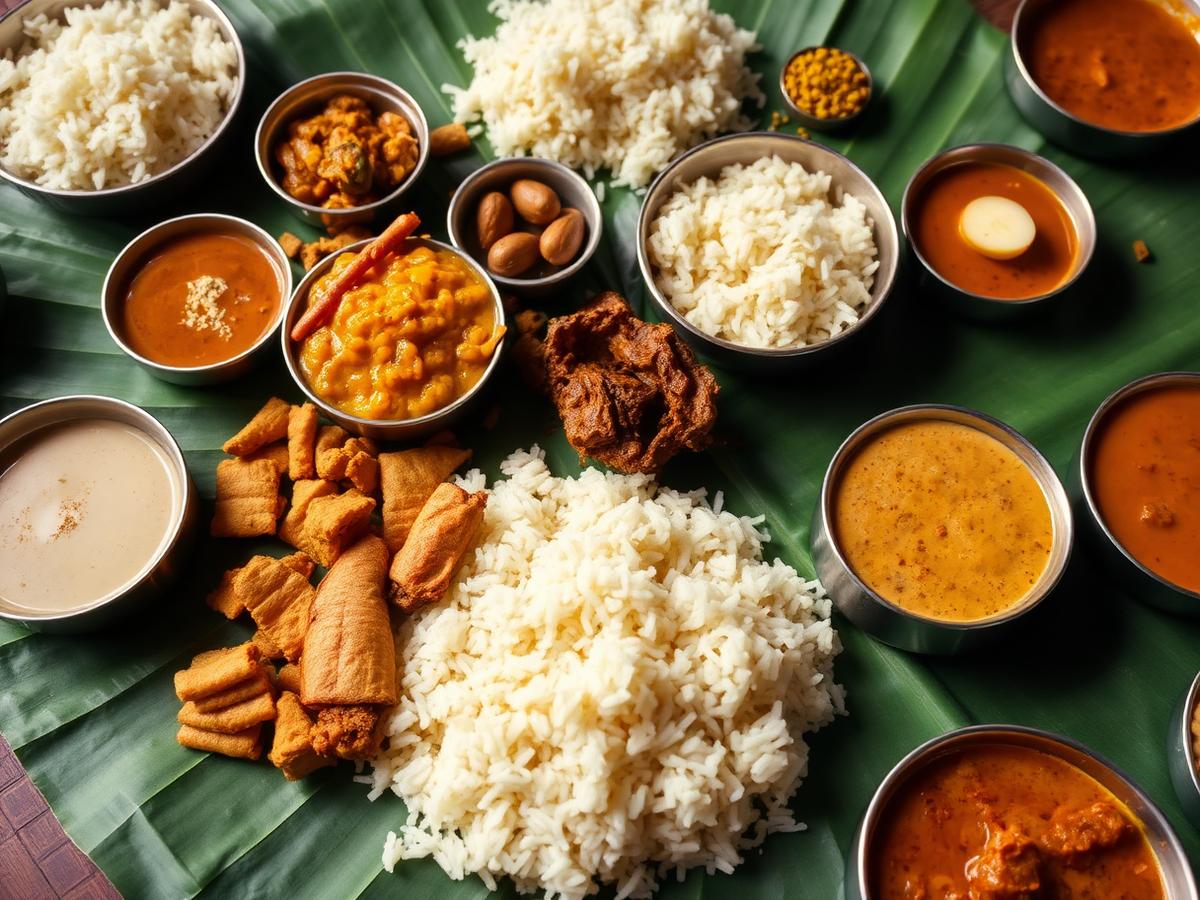
For an Iyer-style menu discussion, I start with paruppu and ghee, plain rice, sambar, rasam, curd and a balanced selection of vegetables. Beans paruppu usili, poosanikai mor kuzhambu and a pepper-cumin rasam make a useful tasting combination, but I would change any of these to match the family’s usual cooking.
The important decision is not how many gravies can fit on the menu. It is whether the meal has enough contrast: a dry vegetable, a softer kootu or avial, a lentil-based preparation and a lighter rasam. If both sambar and mor kuzhambu are requested, I keep their initial servings modest and offer refills.
For sweets, paal payasam with a small jangiri is one option. A Palakkad-influenced family may instead prefer a jaggery-based pradhaman or a different vegetable combination. These are family choices, not requirements for every Iyer wedding.
- Core meal: plain rice, paruppu, ghee, arachuvitta sambar, rasam and curd.
- Vegetables: beans paruppu usili, cabbage poriyal and poosanikai kootu.
- Optional substitution: replace the kootu with avial, or add mor kuzhambu after reviewing the overall menu.
- Accompaniments: appalam, pickle and a small portion of thayir pachadi.
- Sweet combination: paal payasam and one small jangiri; agree on replacements at the tasting.
3. An Iyengar-style wedding lunch menu with measured variety
For an Iyengar-style discussion, puliyodharai and akkaravadisal are useful dishes to ask about, especially when the family wants them for their cultural association. They are not compulsory, and their presence alone does not make a menu suitable for every Iyengar household.
A practical menu can pair a small puliyodharai serving with plain rice, sambar, rasam, poriyal, kootu and curd. I would ask specifically about the preferred puliyodharai seasoning, tamarind intensity and use of peanuts or sesame. Those details matter more at the tasting than a broad claim of “authentic taste”.
Akkaravadisal is rich, so I normally plan it as the principal sweet rather than automatically adding a full portion of milk payasam. If the family wants two sweets, a smaller second portion keeps the meal enjoyable.
- Rice selection: a small puliyodharai portion followed by sufficient plain rice for the main meal.
- Main accompaniments: paruppu, ghee, sambar, rasam and curd.
- Vegetables: chow chow kootu and beans or cabbage poriyal, subject to family approval.
- Additional gravy: mor kuzhambu only if wanted; do not add it merely to increase the item count.
- Sweet: akkaravadisal, with an optional small second sweet selected at the tasting.
- Leaf accompaniments: appalam, pickle and a suitable pachadi.
4. Tamil wedding leaf meal prices in Bengaluru for 2026
For initial budgeting, I would use the following bands for one pure vegetarian lunch serving approximately 150–300 guests. These are indicative 2026 planning figures, not a fixed Upendar Caterers quotation. Guest count, dish selection, venue access and the agreed service scope determine the actual price.
The comparison assumes food, banana leaves, standard seated serving staff and ordinary serving equipment for one lunch service. GST, transport, dining furniture, venue charges, additional cooking infrastructure and extended service should be itemised wherever applicable; do not assume they are included.
An Iyer or Iyengar label should not itself attract a premium. Extra cost should have a clear reason, such as a second ghee-rich sweet, more labour-intensive vegetables, another rice preparation or a longer service window.
| Menu level | Planning price per guest | Typical scope |
|---|---|---|
| Traditional lunch | ₹480–₹620 | Plain rice, paruppu and ghee, sambar, rasam, curd, two vegetable preparations, pachadi, appalam, pickle, one payasam and one small sweet. |
| Expanded family menu | ₹620–₹800 | Traditional lunch with a small variety rice and selected additions such as a third vegetable preparation or a richer principal sweet. |
| Elaborate leaf feast | ₹800–₹1,050 | More labour-intensive preparations, a larger sweet selection and an expanded menu. Confirm additional staffing and service duration explicitly. |
5. Portion the Tamil specialities without overloading the leaf
When puliyodharai, paruppu usili and akkaravadisal appear together, I reduce the first portions rather than treating each as a full standalone serving. Guests should have space for the main rice courses and the option of a fresh refill.
The figures below are cooked or ready-to-serve first-serving quantities per adult, not raw purchasing weights or the total food allowance. Rice, sambar, rasam, curd and refill stock must be calculated separately against the confirmed menu and guest profile.
For example, 200 initial servings of puliyodharai at 70 g require 14 kg of cooked puliyodharai before any refill allowance. Once that rice is included, revise the plain-rice production plan rather than retaining the quantities for a plain-rice-only lunch.
| Dish | First serving per adult | Planning note |
|---|---|---|
| Puliyodharai | 60–80 g cooked | A small variety-rice portion, not a replacement for the entire rice meal. |
| Paruppu usili | 40–50 g cooked | Keep modest when another dry vegetable is also served. |
| Poriyal | 40–50 g cooked | Use a smaller first portion when the menu has three vegetable preparations. |
| Kootu or avial | 50–70 g cooked | Choose the quantity according to how many other accompaniments are included. |
| Thayir pachadi | 25–35 g ready to serve | Serve in small batches and keep reserve stock properly chilled. |
| Akkaravadisal | 60–80 g cooked | Treat as the principal rich sweet; reduce the second dessert if included. |
| Jangiri or another portioned sweet | 25–35 g | A suitable small second sweet alongside payasam. |
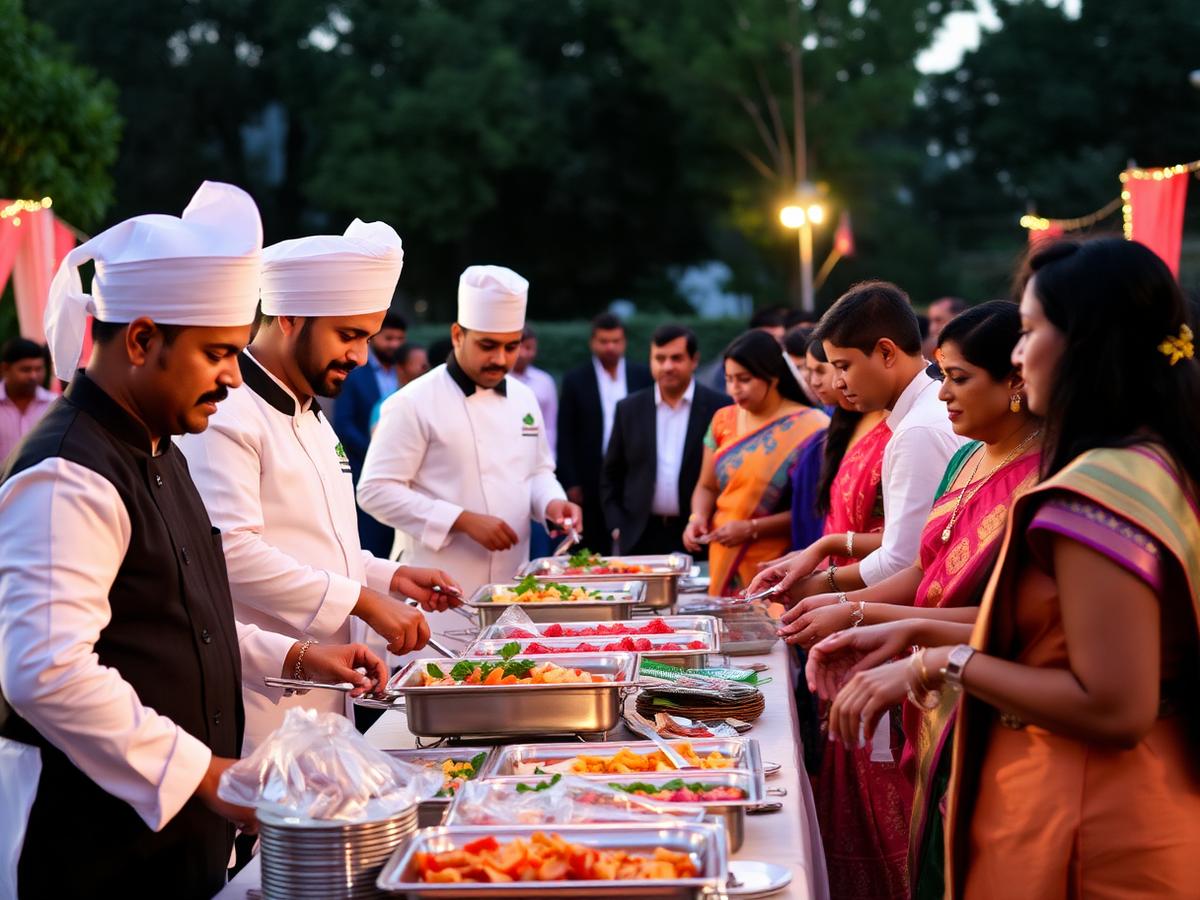
6. Organise seated service around the muhurtham
The challenge is getting each batch through a complete meal without rushing the elders or leaving later guests waiting. Allow approximately 35–45 minutes of eating and serving time per batch, followed by 10–15 minutes for clearing and resetting. Two full batches therefore need roughly 90–115 minutes from the first seating to the final guests finishing.
For 100 occupied dining seats, I would plan 8–10 food servers, two replenishment runners and one dining supervisor. Add two water attendants and three clearing/reset staff; kitchen staff are separate. This is a working service plan, not a universal ratio—long aisles and a distant kitchen can require more people.
If the first seating is planned for 11:30 am, aim to complete the dining setup by 10:45 am, brief staff by 11:00 am and make the final readiness check by 11:15 am. The family coordinator should release the first batch according to the ceremony’s actual progress, not an automatic clock-based announcement.
- Assign someone from the family to communicate ceremony delays to the dining supervisor.
- Tell servers the approved dish names and restrictions before service starts.
- Provide refills by request rather than placing large unwanted portions on every leaf.
- Hold hot food at 60°C or above and chilled curd-based items at 5°C or below until service; avoid leaving them out during ritual delays.
- Keep the bride’s, groom’s and any late-arriving family meals accounted for in the production and service plan.
7. What I would confirm before finalising your wedding lunch
At the tasting, I would prioritise the dishes that define this particular meal: the sambar, rasam, chosen kuzhambu, puliyodharai if included, and the main sweet. Ask the elders to comment on sourness, sweetness, spice level and texture. “Less spicy” is not enough information if the real concern is a strongly sour tamarind preparation.
The final menu should record substitutions as well as inclusions. If a vegetable is unavailable, the replacement should be agreed rather than improvised on the wedding morning. Any requirements concerning ritual food, utensils, preparation access or handling need explicit confirmation before accepting the booking.
To discuss an Iyer or Iyengar wedding leaf meal with Upendar Caterers, call 9661650666. Our official office and kitchen address is Coffee Board Layout, Nagavara, Bengaluru, Karnataka 560024. Share your wedding date, expected lunch attendance, dining-seat capacity and preferred dishes so that we can discuss a clearly scoped quotation.
- Approve one written menu, including the exact sweets and vegetable preparations.
- Record dietary restrictions and ingredient substitutions.
- Agree on the guaranteed guest count, additional-meal rate and headcount revision deadline.
- Confirm the number of dining seats, expected batches and included service hours.
- List responsibility for leaves, drinking water, furniture, clearing and waste removal.
- Keep breakfast, lunch and other wedding meals as separate quotation lines.
Areas we serve in Bengaluru
We cook on site across Bengaluru. Pick your neighbourhood for local menus, pricing and venue notes:
- Yelahanka catering
- RT Nagar catering
- Kalyan Nagar catering
- Nagavara catering
- Hebbal & Kempapura catering
- Sahakarnagar catering
- Thanisandra catering
- Manyata Tech Park catering
Get a menu and quote for your date
Share your date, guest count and location — we will send a tailored pure-veg menu and per-plate quote the same day.
Frequently asked questions
- How much does Tamil wedding catering in Bangalore cost in 2026?
- For one traditional pure vegetarian leaf lunch, use ₹480–₹800 per guest as an indicative planning range for approximately 150–300 guests. An elaborate menu may fall around ₹800–₹1,050 per guest. These are not fixed quotations; ask for GST, transport, venue-related expenses and service inclusions to be stated separately.
- What is the difference between an Iyer and an Iyengar wedding menu?
- There is substantial overlap, including rice, paruppu, sambar, rasam, vegetables, curd and sweets. Some families request particular combinations such as paruppu usili and mor kuzhambu, while others want puliyodharai or akkaravadisal, but these preferences are not exclusive community rules. The most reliable menu comes from the family’s regional background, household traditions and tasting feedback.
- Can we combine Iyer and Iyengar dishes in the same wedding lunch?
- Yes, if both families are comfortable with the selection and there are no conflicting ritual requirements. A shared menu can include a small puliyodharai portion, paruppu usili, the agreed main gravies and one principal sweet. Balance the portions and ask one representative from each family to approve the final version.
- Will the entire Tamil wedding menu be without onion and garlic?
- That should be confirmed in writing rather than assumed from the words “Tamil”, “Iyer” or “Iyengar”. Check every preparation, including spice mixes, pickles and any separately sourced items. Also discuss hing, other restricted ingredients and any special preparation or handling conditions your family follows.
- Can breakfast and the wedding lunch be booked together?
- They can be discussed as part of one booking, but they should have separate menus, guest counts, timings and prices. Breakfast attendance may differ from lunch attendance, and the service team needs a defined clearing and reset window. Confirm whether staffing and equipment can be shared or whether the schedule requires separate arrangements.
- How do we plan for guests with milk, nut or sesame allergies?
- Identify the exact allergy before finalising dishes: payasam and akkaravadisal commonly contain milk, while puliyodharai recipes may contain peanuts or sesame. Discuss ingredient substitutions, separate utensils and the risk of cross-contact rather than simply removing a visible garnish. For a severe allergy, agree on a meal only after the caterer has confirmed whether the required controls can be provided.
About the author
Nandu Yadav
Chief Consultant & Owner, Upendar Caterers · 20 years in catering
Nandu Yadav is a veteran of the Bangalore catering industry with over 20 years of experience. He specializes in large-scale pure vegetarian event planning, traditional South Indian menu design, and per-plate costing for weddings and corporate events. Having managed over 5,000 successful functions across North Bangalore (Sanjaynagar, Sahakarnagar, Hebbal) and major tech parks, Nandu provides authoritative insights based on real-world logistical expertise.
- Pure Vegetarian Wedding Catering
- Per-plate Costing & Quantity Planning
- Traditional Brahmin & South Indian Menus
- Corporate Lunch Operations in Tech Parks
- On-site Kitchen Setup & Food Safety (FSSAI)
- Logistics for Large Events (5000+ guests)