Brahmin Wedding Catering in Bangalore: Satvik Menus, Madi Tradition and 2026 Costs
AI Overview
Brahmin wedding catering in Bangalore is pure vegetarian and satvik: no onion, no garlic, cooked fresh on site in ritually clean vessels, timed to the muhurtham rather than a serving clock. In 2026 it costs ₹380–₹650 per plate for a full wedding lunch with two sweets, with separate rates for the homa-day meal, the evening reception and the next-morning breakfast. The essentials to confirm with any caterer: a cook who understands madi and kitchen shuddhi, a written menu approved by the family priest, kitchen access from 4–5 AM, and banana-leaf batch service matched to the dining hall.
Key takeaways
- Satvik means no onion, no garlic, and in most families no root vegetables on the homa day — confirm the exact rule with your priest, not the caterer's default.
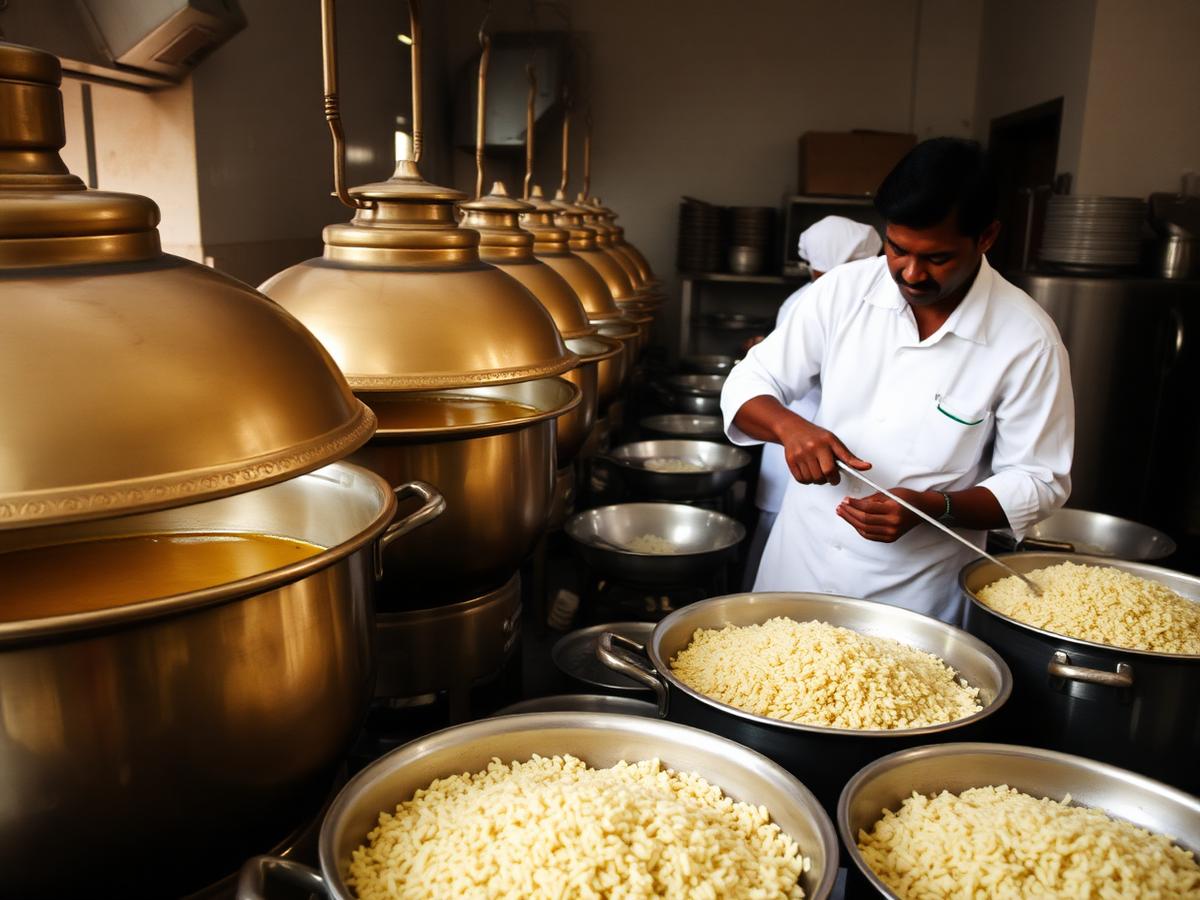
- Everything is cooked fresh on site from 4–5 AM; a caterer who proposes cooking the night before does not understand the tradition.
- A full Brahmin wedding lunch costs ₹380–₹650 per plate in 2026; the homa-day meal and next-day breakfast are billed separately.
- The meal follows a fixed banana-leaf order — salt and pickle first, payasam before rice — and the serving team must be briefed on it.
- Menu approval by the family priest or elder a week before the wedding prevents every day-of dispute.
Key takeaways
- Satvik means no onion, no garlic, and in most families no root vegetables on the homa day — confirm the exact rule with your priest, not the caterer's default.
- Everything is cooked fresh on site from 4–5 AM; a caterer who proposes cooking the night before does not understand the tradition.
- A full Brahmin wedding lunch costs ₹380–₹650 per plate in 2026; the homa-day meal and next-day breakfast are billed separately.
- The meal follows a fixed banana-leaf order — salt and pickle first, payasam before rice — and the serving team must be briefed on it.
- Menu approval by the family priest or elder a week before the wedding prevents every day-of dispute.
What makes Brahmin wedding catering different from a regular veg wedding menu
Three things. First, the food is satvik: no onion, no garlic anywhere in the kitchen that day, and on the homa and muhurtham day most families also exclude root vegetables like potato and carrot. Second, the cooking follows madi discipline — freshly bathed cooks, washed and sun-dried or ritually cleaned vessels, and nothing carried over from a previous day's cooking. Third, the kitchen runs on the muhurtham: if the wedding is at 10:40 AM, lunch begins around 12:30 PM, and the entire cooking sequence is planned backwards from that minute.
A general caterer can produce an excellent vegetarian meal and still fail this brief, because the discipline is in the process, not just the ingredient list. When you interview caterers, ask who cooks, what the kitchen rule is on the homa day, and how they handle the family priest's menu corrections. The answers tell you immediately whether they have done this before.
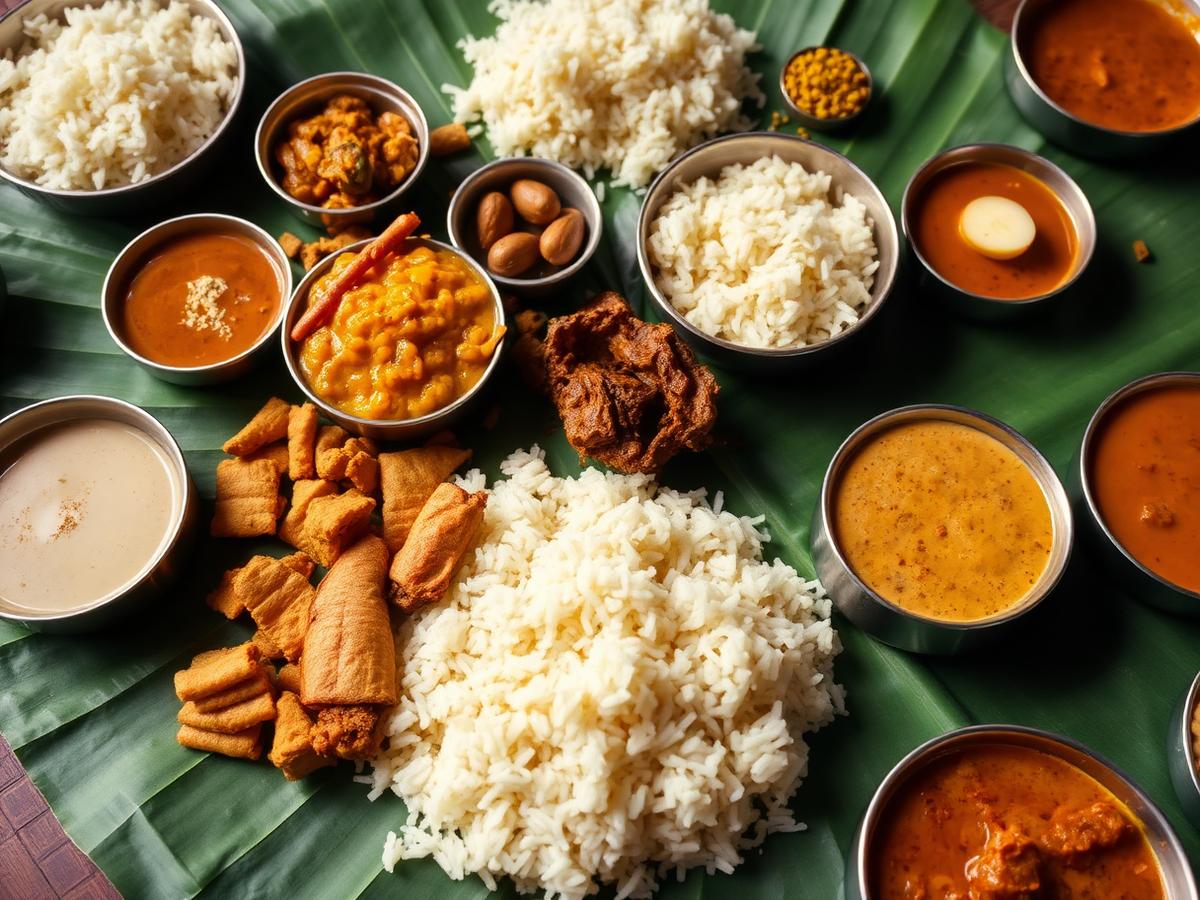
A traditional Brahmin wedding lunch menu, in serving order
This is the full wedding-day lunch we serve most often for 300–800 guests across Bengaluru. The order on the leaf is traditional and the serving team follows it exactly.
- 01Salt, pickle and a small portion of kosambari — placed first, top-left of the leaf.
- 02Palya (two dry vegetable preparations) along the top edge.
- 03Payasam — served first among the sweets, on the leaf, before rice.
- 04A second sweet such as Mysore pak or badam burfi.
- 05Plain rice with ghee, then sambar.
- 06Second rice course with rasam.
- 07Kootu or gojju alongside the rice courses.
- 08Curd rice to close, with buttermilk served through the meal.
- 09Beeda (paan) and banana at the end, by tradition.
For the reception or for guests who prefer it, a North Indian section — poori, paneer and a pulao — can run alongside, cooked in a clearly separate section of the kitchen so the satvik meal is untouched. See our North Indian wedding menu guide for that spread.
What Brahmin wedding catering costs in Bangalore in 2026
Pricing is per plate and per function. A two-day wedding typically has four billed services: the homa-eve or mehendi meal, the homa-day satvik lunch, the wedding-day grand lunch, and the next-morning breakfast.
| Function | Typical menu | Cost per plate |
|---|---|---|
| Homa-day satvik meal | No onion, garlic or root vegetables; simple rice, sambar, kootu, one payasam | ₹280 – ₹420 |
| Wedding-day grand lunch | Full menu above: two sweets, two palyas, kosambari, payasam, curd rice | ₹380 – ₹650 |
| Reception dinner (mixed) | South Indian meal plus a North Indian or live-counter section | ₹550 – ₹850 |
| Next-morning breakfast | Idli, vada, pongal or uppittu, kesari bath, filter coffee | ₹120 – ₹180 |
For a 500-guest wedding-day lunch at ₹450 per plate, catering is about ₹2.25 lakh, with venue-side charges extra if you are in a kalyana mantapa — our kalyana mantapa catering guide lists those. The wedding cost-per-plate guide breaks down what drives a quote up or down.
The muhurtham-driven kitchen timeline
The timeline below is for an 11 AM muhurtham with lunch from 12:30 PM. Shift everything by the muhurtham time, not the other way around.
Step 1
4:30 AM — kitchen handover and shuddhi
Kitchen cleaned, vessels washed, cooks bathed and in fresh clothes before the stove is lit.
Step 2
5:30 AM — payasam and sweets begin
Payasam is started first so it can cool and settle; burfis and Mysore pak follow.
Step 3
7:00 AM — breakfast for family and early guests
Idli, vada, pongal and coffee during the homa.
Step 4
9:00 AM — main lunch cooking
Rice, sambar, rasam, kootu, palyas and kosambari in sequence, all finished by noon.
Step 5
11:45 AM — dining hall set
Leaves laid, water and buttermilk stationed, servers briefed on the leaf order.
Step 6
12:30 PM — first batch seated
Batches matched to hall seating, 35–40 minutes each, starting with family and the couple.
Madi, shuddhi and the kitchen rules to agree in writing
- No onion or garlic in the kitchen at all on the homa and muhurtham day — not even in a separate staff meal cooked in the same space.
- Root vegetables excluded on the homa day where the family follows that rule; confirm the exact list with the priest.
- Fresh cooking only: nothing from a previous event is carried into a wedding kitchen.
- Separate vessels and a separate stove line for any non-satvik section, such as a reception North Indian counter.
- Jain guests get a fully separate preparation without root vegetables — tell the caterer the count in advance.
- Leftover food handling follows the family's instruction: distributed, sent home, or donated — agreed before the day.
Our satvik no-onion no-garlic menu guide goes deeper into the ingredient rules, and the banana leaf meal order guide shows exactly where each item sits on the leaf.
Questions to ask before you book a Brahmin wedding caterer
Caterer checklist for a Brahmin wedding
- How many Brahmin weddings have you cooked in the last year, and can I speak to one family?
- Who is the head cook on my date, and has he cooked to madi discipline before?
- Will you take the menu through my priest's corrections without argument?
- Is the homa-day meal cooked without root vegetables if my family requires it?
- From what time do you need kitchen access, and is it in your quote?
- How do you run a North Indian reception section without touching the satvik kitchen?
- What is the per-plate rate for each function separately, in writing?
- How many servers per batch, and are they briefed on the banana-leaf order?
- What happens to leftover food, and who decides?
How we cater a Brahmin wedding
Upendar Caterers has cooked pure vegetarian weddings in Bengaluru since 1995, and Brahmin weddings are the functions our kitchen knows best. The head cook sits with the family — and the priest where the family wishes — before the menu is finalised. Everything is cooked fresh on site from early morning, the homa-day rules are followed exactly as the family states them, and the serving team is briefed on the leaf order before the first batch sits down.
“The menu is the family's and the priest's, not ours. Our job is to cook it exactly as agreed, on muhurtham time, without a single shortcut in the kitchen.”
Areas we serve in Bengaluru
We cook on site across Bengaluru. Pick your neighbourhood for local menus, pricing and venue notes:
- Yelahanka catering
- RT Nagar catering
- Kalyan Nagar catering
- Nagavara catering
- Hebbal & Kempapura catering
- Sahakarnagar catering
- Thanisandra catering
- Manyata Tech Park catering
Get a menu and quote for your date
Share your date, guest count and location — we will send a tailored pure-veg menu and per-plate quote the same day.
Frequently asked questions
- What is satvik food at a Brahmin wedding?
- Satvik food is pure vegetarian and cooked without onion or garlic. On the homa and muhurtham day, most families also exclude root vegetables such as potato and carrot. Everything is cooked fresh on site in ritually clean vessels, and the exact rules are confirmed with the family priest before the menu is finalised.
- How much does Brahmin wedding catering cost per plate in Bangalore?
- In 2026, the homa-day satvik meal costs ₹280–₹420 per plate and the full wedding-day grand lunch with two sweets costs ₹380–₹650 per plate. A reception dinner with a North Indian or live-counter section runs ₹550–₹850, and next-morning breakfast ₹120–₹180. Each function is billed separately.
- What is madi cooking and does the caterer need to follow it?
- Madi is the traditional discipline of ritual cleanliness in the kitchen: freshly bathed cooks in fresh clothes, washed and ritually cleaned vessels, and nothing carried over from previous cooking. Most Brahmin families expect it for the homa and wedding day. Ask any caterer directly whether their team has cooked to madi discipline before — it cannot be improvised on the day.
- What time does the caterer start cooking for a morning muhurtham?
- For an 11 AM muhurtham with lunch from 12:30 PM, the kitchen starts at 4:30–5 AM. Payasam and sweets begin first so payasam is ready before the muhurtham ends — it is served first on the leaf. Get the early kitchen access written into the hall agreement.
- Can a North Indian menu be served alongside the satvik meal?
- Yes, usually at the reception. A separate stove line and separate vessels are used for the North Indian section — poori, paneer, pulao or live counters — so the satvik wedding meal is untouched. Tell the caterer the split of guests so both lines are staffed correctly.
- Who approves the wedding menu — the family or the priest?
- Both, in practice. The family sets the menu and budget, and the family priest or senior elder confirms the homa-day meal and the order of sweets. Send the draft menu for approval at least a week before the wedding; corrections on paper are easy, corrections in the kitchen are not.
About the author
Nandu Yadav
Chief Consultant & Owner, Upendar Caterers · 20 years in catering
Nandu Yadav is a veteran of the Bangalore catering industry with over 20 years of experience. He specializes in large-scale pure vegetarian event planning, traditional South Indian menu design, and per-plate costing for weddings and corporate events. Having managed over 5,000 successful functions across North Bangalore (Sanjaynagar, Sahakarnagar, Hebbal) and major tech parks, Nandu provides authoritative insights based on real-world logistical expertise.
- Pure Vegetarian Wedding Catering
- Per-plate Costing & Quantity Planning
- Traditional Brahmin & South Indian Menus
- Corporate Lunch Operations in Tech Parks
- On-site Kitchen Setup & Food Safety (FSSAI)
- Logistics for Large Events (5000+ guests)
Content review
Fact-checked by Nandu Yadav, Owner & Head Chef, Upendar Caterers · Last reviewed 24 September 2026
Menus, ritual rules and 2026 prices reflect Brahmin weddings we catered across Bengaluru this year.